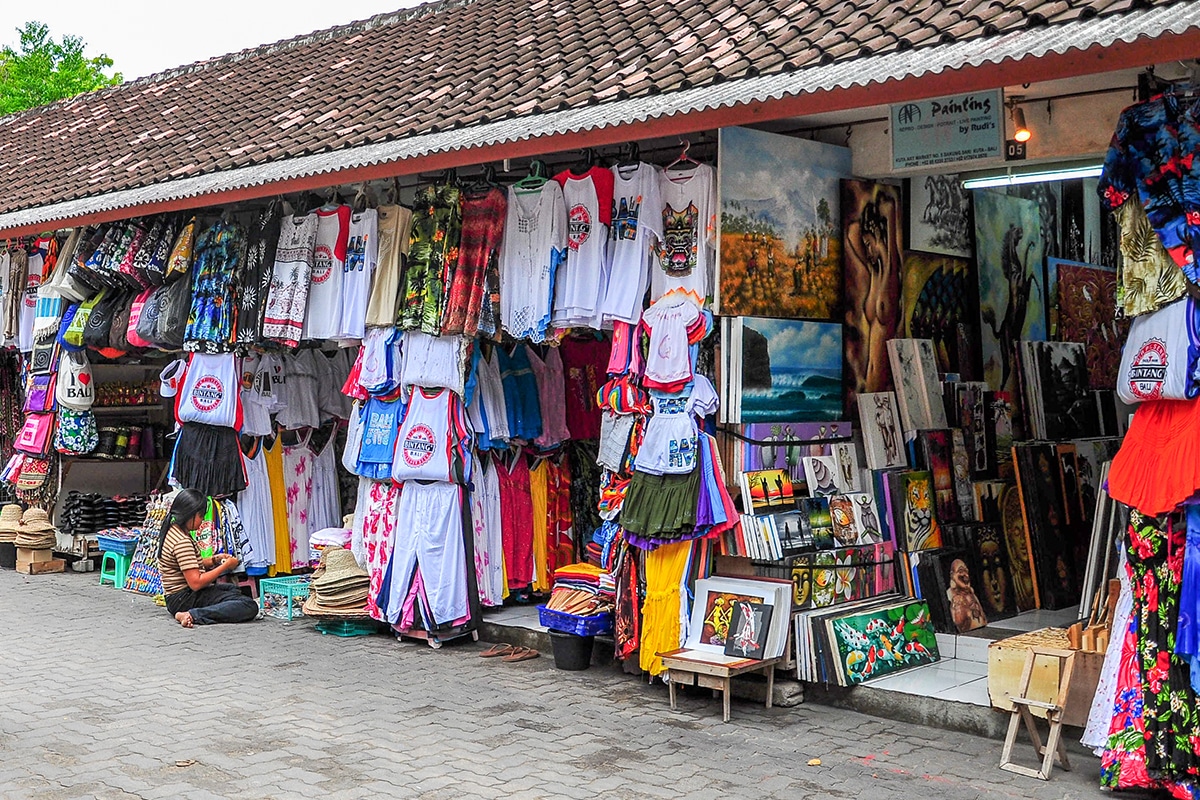
Shopping in Bali can be more meaningful than collecting identical souvenirs: traditional markets connect travellers with local painters, textile sellers, woodcarvers and families who have traded in the same neighbourhoods for generations. These five art markets in Bali are useful starting points for handicrafts, paintings, fabrics and gifts, but you should know how to recognise genuinely locally made products and bargain with respect. This updated guide also clarifies the difference between souvenir stalls, traditional food markets and organised craft centres.
How to shop responsibly at Bali’s art markets
Some stalls sell handmade local work; others resell mass-produced items. It is reasonable to ask where a product was made, what material it uses and whether the seller works directly with an artisan. Bargaining is common in some markets, but avoid aggressive negotiations over small sums and always agree on prices before paying. Bring rupiah, a reusable bag and a courteous attitude. Consult our Indonesia money guide and Balinese craft ideas.
1. Kuta Art Market: souvenirs near the beach
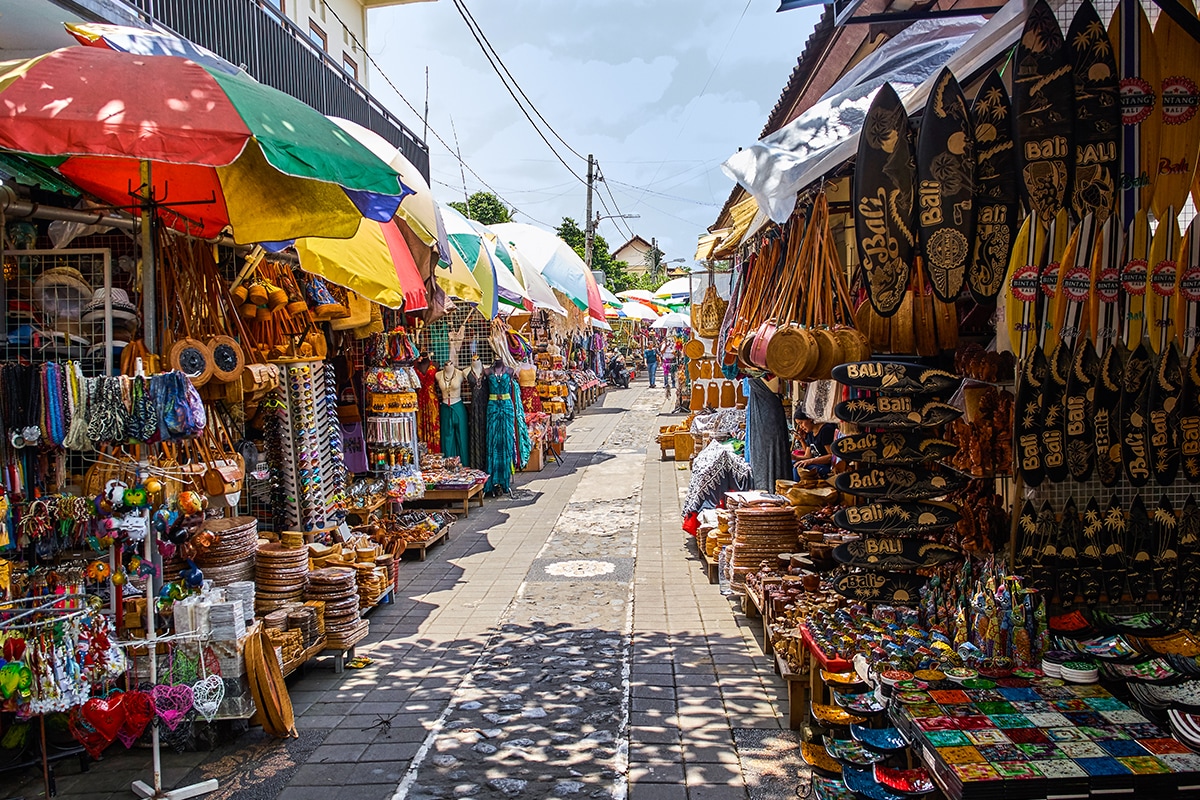
Pasar Seni Kuta serves travellers near Kuta’s busy beach and shopping district. You may find sarongs, T-shirts, artwork, lightweight bags and small gifts, alongside imported or machine-made souvenirs. Product availability changes by stall, so do not expect a uniform range. It is convenient for a short visit after exploring the coastline rather than a destination for rare collectors’ pieces.
Tips for visiting
Walk around before making a purchase, inspect seams and fabric quality, and make sure delicate items are packed securely. Compare this with other souvenir spots in Bali and the island’s varied photo-friendly attractions on a separate outing.
2. Kumbasari Art Market: a Denpasar craft stop
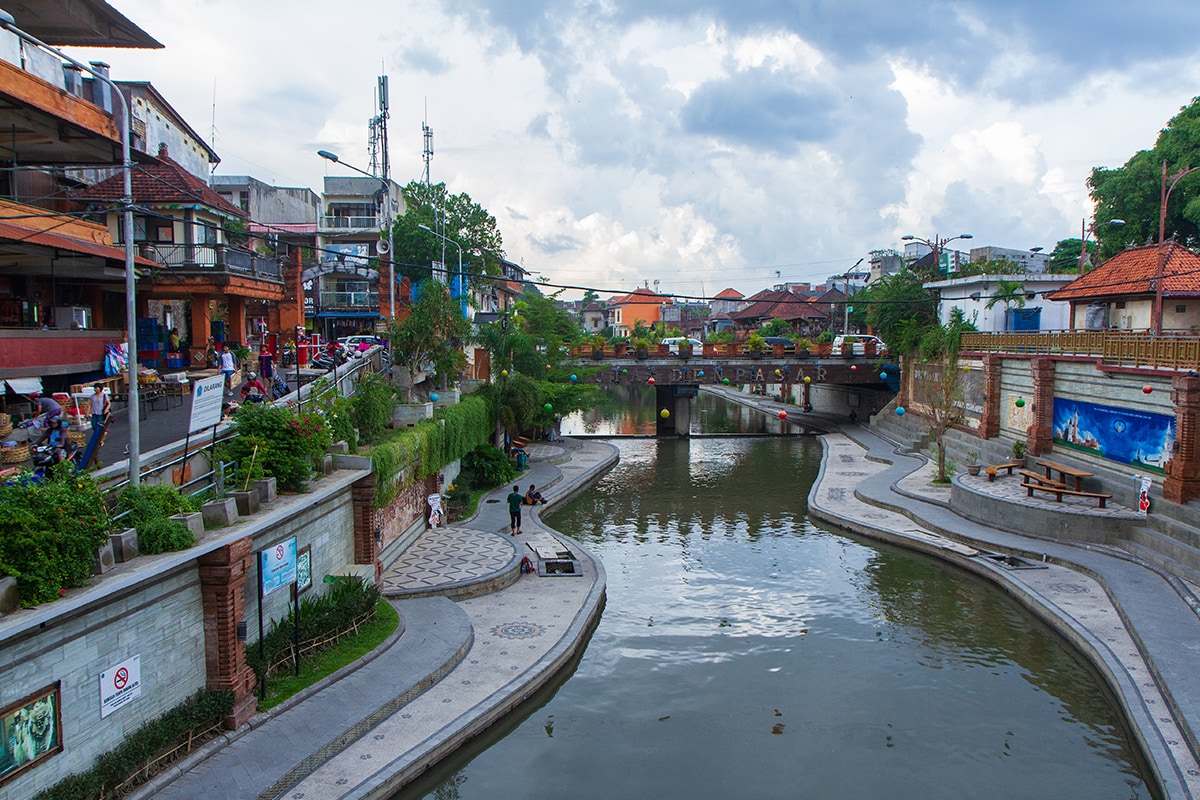
Kumbasari lies in central Denpasar near the Badung River and is a well-known place to browse textiles, decorative objects and Balinese handicrafts. It is an urban market environment, not an open-air tourist village. Different vendors offer different quality levels, so examine materials and ask about an item’s maker before purchasing. Hours and individual stall operations may change.
What to look for
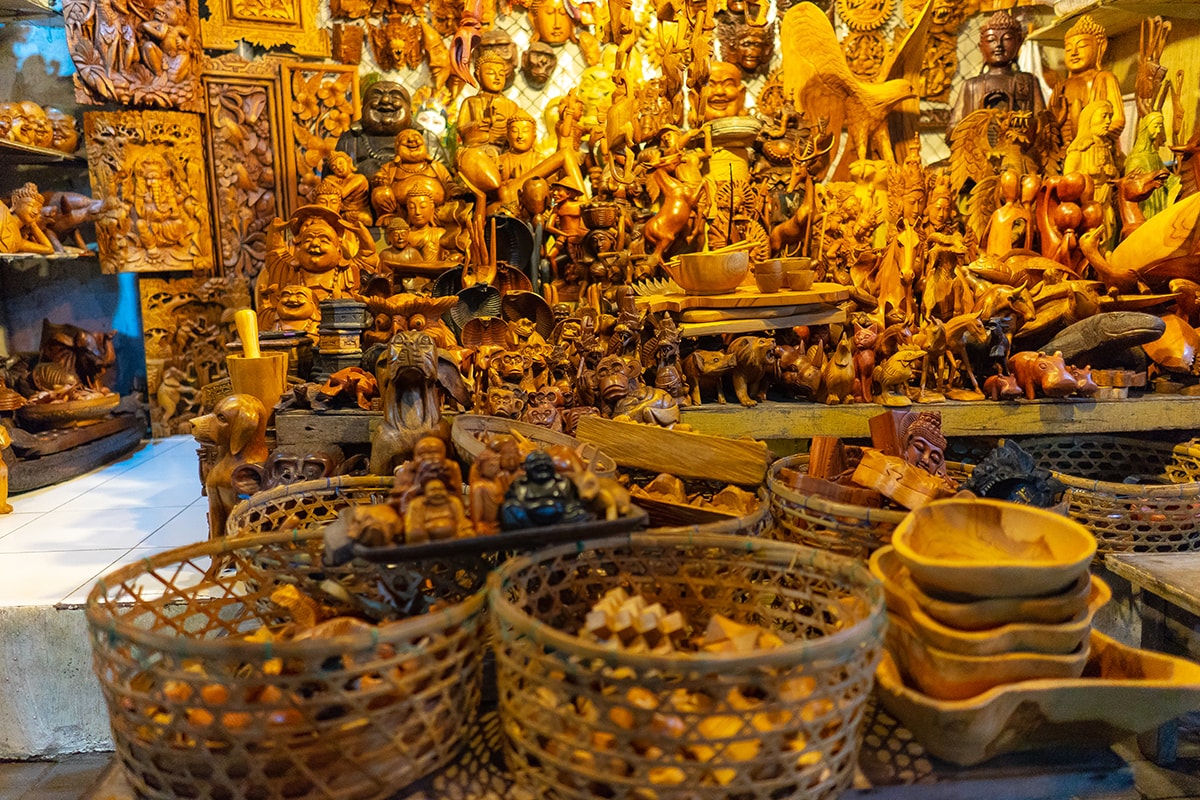
Textiles, carvings, woven accessories and artworks can be interesting purchases, particularly when a seller can explain their origin. Avoid buying suspicious antiquities or protected natural materials. Travellers interested in the cultural context of textiles can read batik stories and Indonesia’s regional design traditions.
3. Badung Market: local food and everyday Denpasar life
Pasar Badung is more accurately described as a major traditional fresh market than a specialised art market. It is near Kumbasari and offers a valuable perspective on daily shopping, food ingredients, offerings and local commerce. This distinction matters: visitors looking exclusively for paintings or souvenir shops might be disappointed if they do not understand the market’s core purpose.
Respect the working market
Visit without disrupting vendors and ask before photographing people, particularly those preparing offerings or working in tight spaces. It is a good opportunity to learn about ingredients in Balinese cuisine or traditional Indonesian breakfasts. Wash or sanitise hands before eating and avoid blocking stalls.
4. Sukawati Art Market: a classic Gianyar craft destination
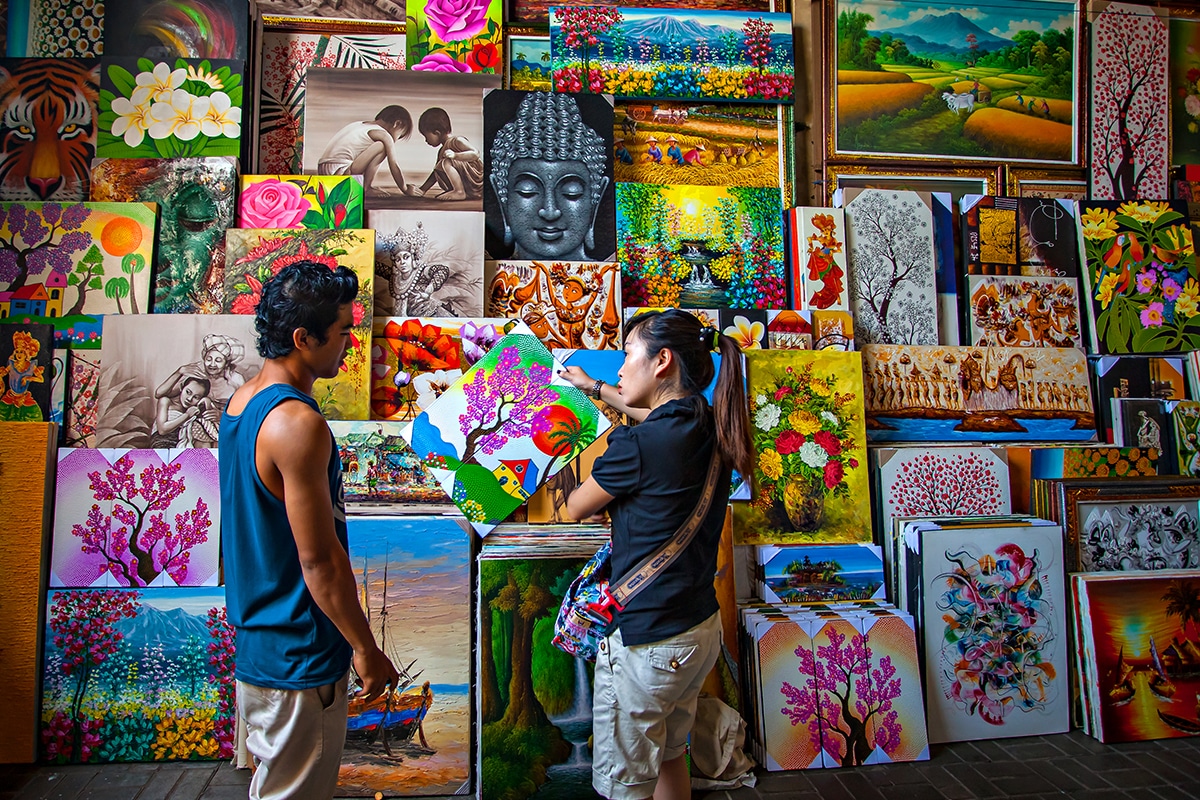
Pasar Seni Sukawati is among Bali’s best-known craft shopping locations, serving visitors interested in paintings, clothing, souvenirs, woodwork and decorative objects. Markets have undergone renovation and management changes; older photos may not show the current layout. Check parking, stall locations and public hours rather than relying on a vintage travel guide.
Shopping tips
Speak with several vendors, compare quality and ask whether an artwork is an original, reproduction or printed image. Pack fragile carvings carefully and be mindful of timber provenance. Combine the journey with Ubud-area excursions and Tegallalang’s rice landscapes, keeping driving times realistic.
5. Guwang Sukawati Art Market: an alternative nearby
Pasar Seni Guwang in the Sukawati area offers another collection of souvenir and craft stalls. It may suit visitors who prefer to compare merchants in more than one market on the same route, but product ranges and opening patterns vary. Treat older “CHSE certification” notices in the original article as historical context rather than current guarantees about market operations.
What to buy
Look for functional gifts that will travel well: textiles, baskets, small carvings or accessories with a clear origin. If you want a more cultural day, explore Penglipuran’s village heritage and other Bali villages, without conflating daily community life with a craft-shopping venue.
How to bargain politely in Bali
Ask the price before negotiating
A polite smile and a fair counteroffer can work better than a dramatic opening bid. Look for fixed-price notices, especially at cooperatives or artists’ studios where bargaining may be inappropriate. Small-value products may involve limited profit for makers. Paying fairly supports craft skills and local livelihoods.
Know what you can take home
Wood, animal-derived materials, coral and antiques may be subject to export or quarantine restrictions. Do not buy protected wildlife products or objects misrepresented as authentic ancient artefacts. Check your destination country’s customs regulations before purchasing. Our Indonesia travel safety guide provides broader advice.
A half-day Bali art-market itinerary
Denpasar shopping route
Visit Kumbasari and Badung Market on the same morning. Take time for lunch and observe the differences between craft and food commerce rather than attempting to buy everything in one stop. Travellers seeking a memorable dinner can continue with Bali’s destination restaurants.
Gianyar craft route
Explore Sukawati and Guwang before a relaxed visit to central Bali. If your accommodation is in Canggu, allow extra driving time; a map’s straight-line distance will not predict travel time during peak traffic. Add a cultural stop from Bali’s temple guide if it fits geographically.
Frequently asked questions
Which Bali art market is best for first-time visitors?
Sukawati is a classic choice for handicrafts; Kuta is convenient for beach-area shopping, while Kumbasari suits a Denpasar visit.
Is Badung Market an art market?
Its primary focus is fresh produce and everyday local market trade. Visit for the cultural experience rather than expecting only souvenirs.
Should I pay cash?
Small cash notes are handy in markets, though some vendors accept electronic payments. Confirm the accepted method and total before buying.
Authoritative references and cultural context
- Wonderful Indonesia — Bali culture and travel information
- Wonderful Indonesia — Bali destination
- Bank Indonesia — rupiah and payment guidance
Original Bali market photos and credited media
Original visuals are retained below to preserve the editorial asset history; shop layouts and branding may have changed since publication.