Indonesia’s religious architecture reflects its diverse communities and long history of cultural exchange. From an Indo-Mughal-inspired Marian shrine in Medan to a Balinese-influenced Catholic church and a pioneering heritage complex in Kediri, these five remarkable churches in Indonesia show why sacred architecture should be appreciated for more than its appearance. This guide retains the five places in the original article, updates their historical context, and explains how international visitors can plan a respectful visit.
Visitor note: all five remain places of religious significance. Admission, worship times and permissions can change. Check with the relevant church office before travelling, and do not treat any sacred building as a commercial photo studio.
Why Indonesia’s churches look so different
Christian and Catholic traditions developed in Indonesia through many historical periods and in different cultural settings. Regional architects, communities and builders have incorporated local forms and materials into worship spaces. A shrine shaped by Indian-Christian symbolism is different from a Karo-inspired church in North Sumatra or a Balinese church in Jembrana. For wider cultural background explore Indonesia’s religious and cultural diversity and our practical introduction to Indonesia.
Five remarkable churches worth understanding
1. Graha Maria Annai Velangkanni, Medan
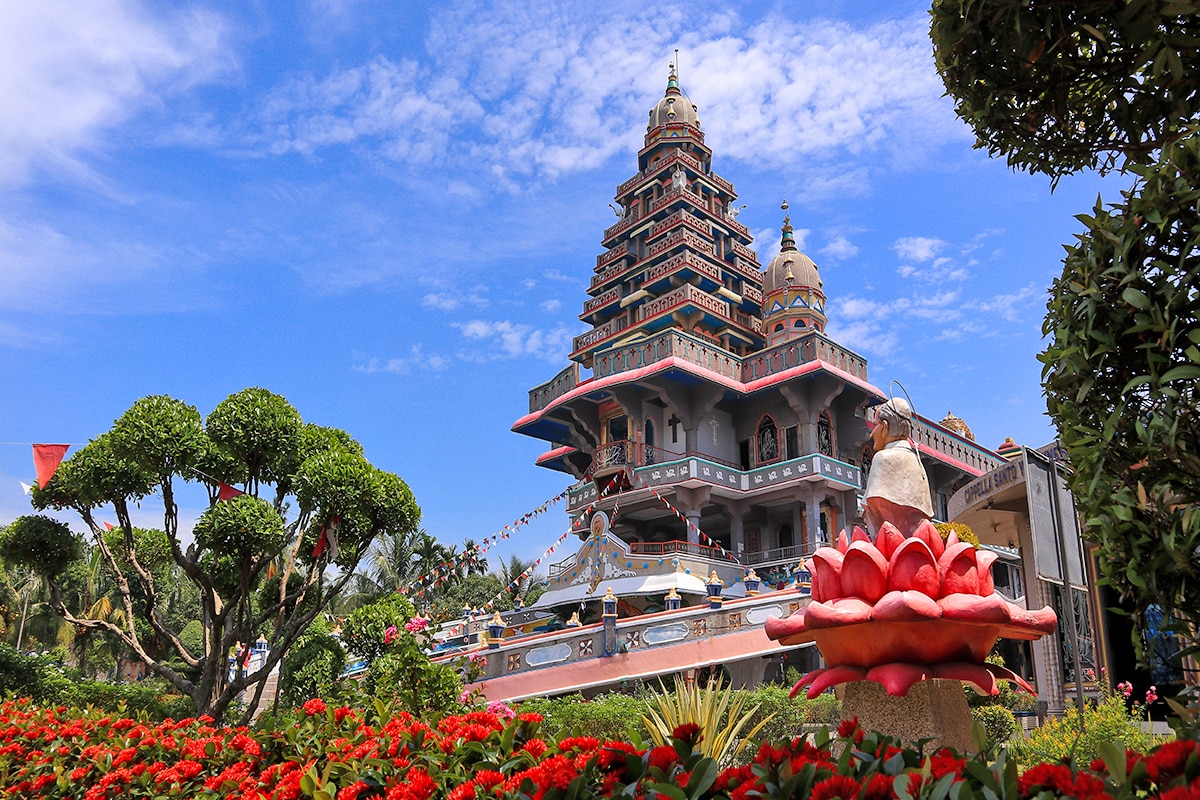
This Marian shrine, opened in 2005, is one of Medan’s most recognisable religious buildings. Its Indo-Mughal-inspired structure, striking roofline, staircases, sculpture and biblical artwork reflect the vision of Father James Bharataputra. The sanctuary’s own website explains that its entrance includes references to traditional Batak architecture, while its spaces are designed for reflection and pilgrimage. It is not simply a colourful building for photographs: its spiritual symbolism matters to the Catholic community and visiting pilgrims.
Location and visitor advice
Taman Sakura Indah, Jalan Sakura III No. 7–10, Tanjung Selamat, Medan. Confirm worship hours and any photography restrictions directly with the shrine. Be particularly mindful of visitors attending private prayer or mass.
The shrine’s official architectural explanation describes the meaning of its unusual design. Travellers arriving in Medan should also allow time to explore regional heritage rather than treat the building as a brief photo stop.
2. Santo Fransiskus Asisi Church, Berastagi
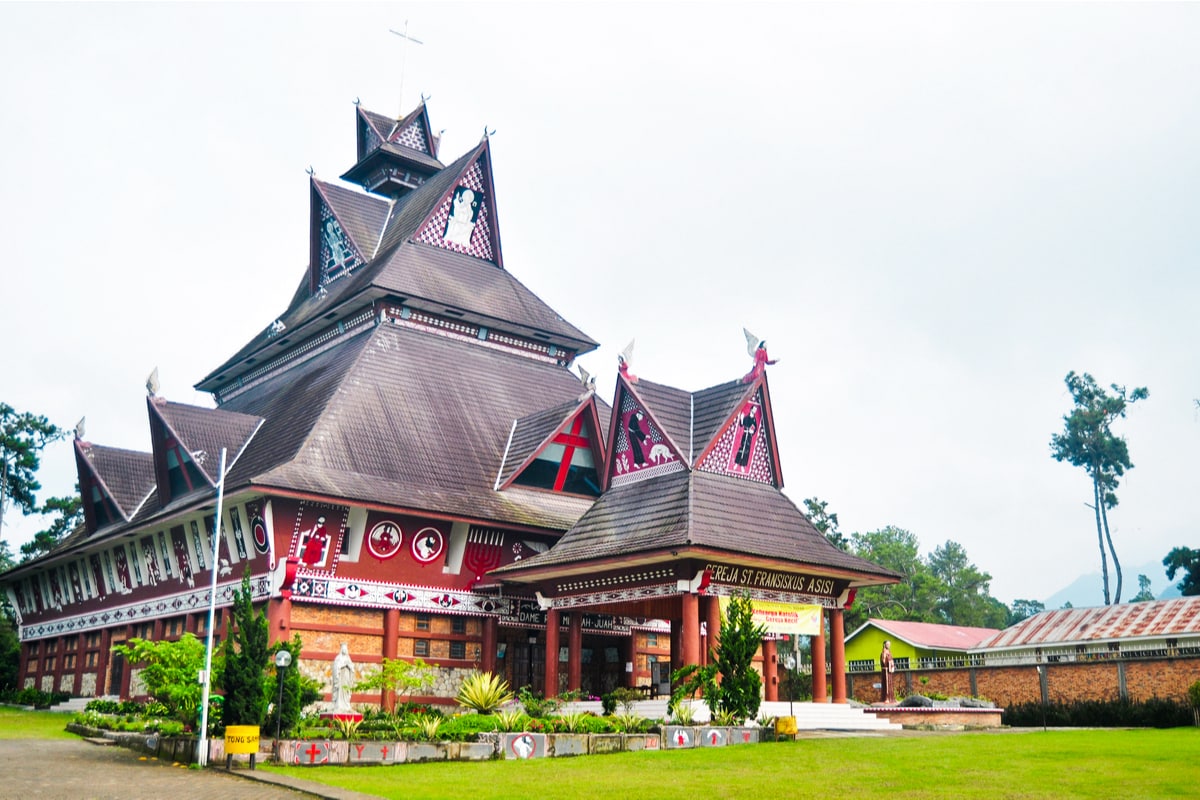
Berastagi’s St Francis of Assisi Church is associated with Karo Batak architectural influences, reflecting the way local design traditions can become part of Catholic worship spaces. Its distinctive roof and regional motifs are worth studying alongside the church’s active religious function. The old article described picturesque architecture but gave too little context about how deeply faith and local cultural identity intersect.
Location and visitor advice
Berastagi is a highland town, not a neighbourhood in Medan. Allow separate travel time, watch mountain weather and check whether visitors can enter between services. A religious building’s interior may not be freely accessible every day.
Understanding Karo architecture can deepen the experience; compare traditional Indonesian houses and living community traditions.
3. Regina Caeli Church, Pantai Indah Kapuk, Jakarta
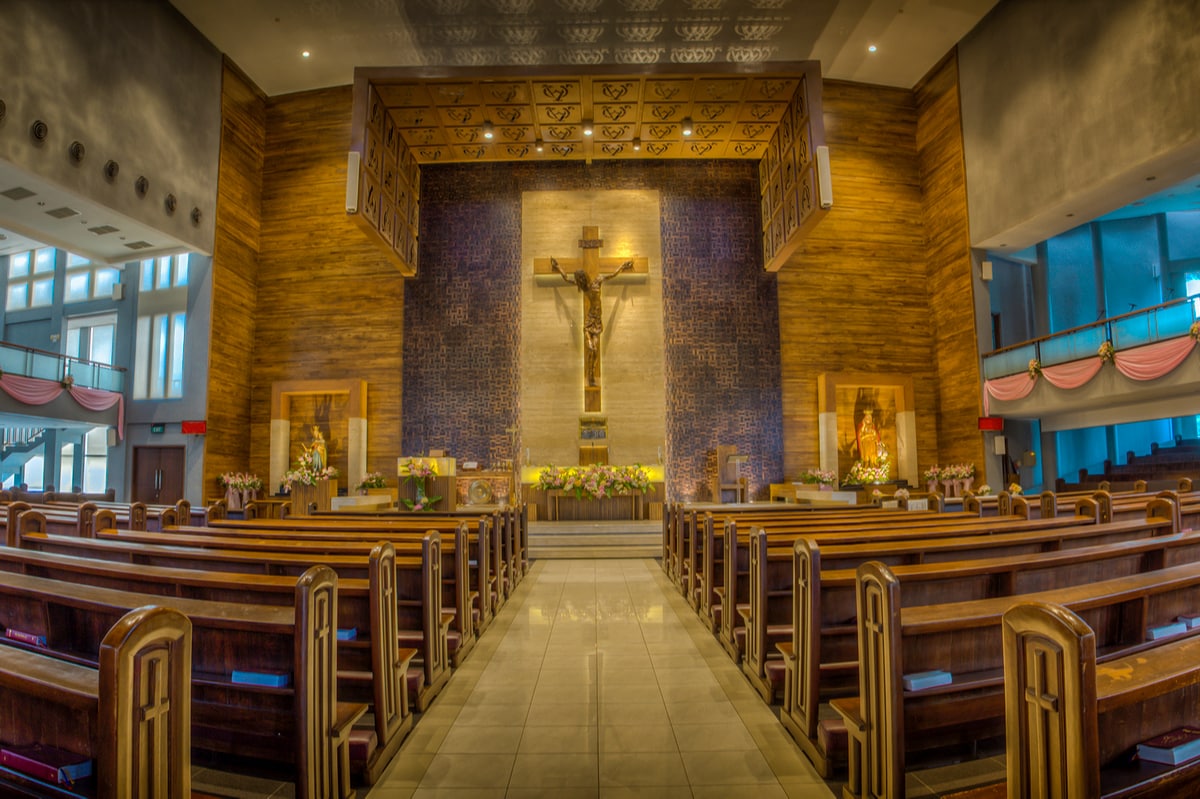
Regina Caeli is a Catholic parish in the Pantai Indah Kapuk neighbourhood of North Jakarta. Its modern architectural lines differ markedly from older mission churches in Indonesia; the building’s identity comes from contemporary parish life rather than decorative antiquity. The church serves worshippers, so visitors need to respect mass times, parish events and security procedures.
Location and visitor advice
Mediterania Boulevard, Pantai Indah Kapuk, Jakarta Utara. Check the parish’s current contact channels for mass schedules and non-worship visitor access. Do not assume sightseeing is allowed during services.
For a contrasting city sightseeing day, explore Jakarta’s landmark guide and reserve prayer spaces for parish use.
4. Sacred Heart of Jesus Church, Palasari, Bali

The Catholic community around Palasari in western Bali illustrates how religious life can take on locally distinctive architectural and social forms. The church’s design incorporates local Balinese elements and a regional Catholic history. Earlier descriptions sometimes oversimplified its age or building phases; the present complex should be understood in the context of Catholic settlement and the village’s continuing community, rather than as an unchanging colonial monument.
Location and visitor advice
Located in the Palasari/Ekasari area, Melaya, Jembrana, West Bali. This is far from Kuta, Ubud or southern resort districts. Check current parish access, dress appropriately and avoid visiting solely for photography during religious activities.
Western Bali’s identity extends well beyond beaches. Read our Balinese temple etiquette guide and local artisan markets for complementary activities.
5. Santa Maria Pohsarang Church, Kediri, East Java
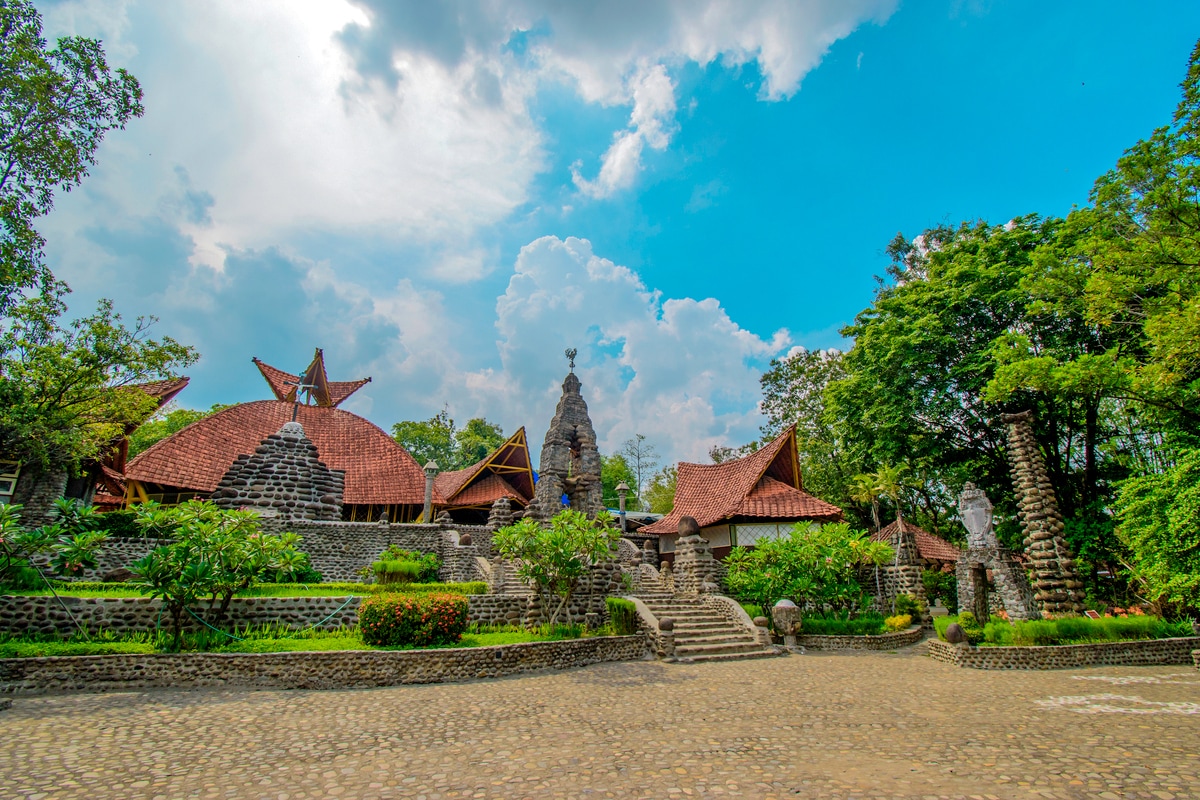
Pohsarang (also spelled Puhsarang) is notable for architecture linked to the Dutch architect Henri Maclaine Pont and its use of local building methods and forms. The complex is associated with the 1930s and combines elements inspired by Javanese architecture with the requirements of Catholic liturgy. It has become a place of devotion and pilgrimage as well as architectural interest. Respect the distinction between ordinary sightseeing areas and places intended for prayer.
Location and visitor advice
Pohsarang village, Semen district, Kediri Regency, East Java. Reconfirm routes, parking, pilgrimage arrangements and whether areas close during particular services or major church celebrations.
East Java’s history includes many architectural influences. Visitors extending a cultural journey may consider East Java travel ideas.
How to visit churches and sacred places respectfully
Check worship schedules and access first
Prayer times, church services, pilgrimages and weddings take precedence over leisure photography. A published address is not an invitation to roam through chapels or private parish rooms. Contact staff where possible, arrive quietly and accept restrictions without argument. The same principle applies to mosques, temples and other sacred spaces. Read about religious celebrations and etiquette and community-led cultural encounters.
Dress, photography and donations
Cover shoulders and knees where requested, remove headwear when appropriate for the particular community, and respect any posted instructions. Never photograph worshippers or children without consent, and keep flash and loud equipment away from services. Donations are voluntary unless a site clearly publishes an admission policy; a donation does not grant access to restricted spaces.
Understand active worship versus historic monuments
Some heritage sites are museum-like, but these five places serve actual communities. Their design connects local identity, regional building techniques and Christian devotion. If you prefer learning through public exhibitions, visit museums or workshops such as Yogyakarta’s craft centres.
Regional itinerary ideas
North Sumatra: Medan and Berastagi
Graha Maria Annai Velangkanni and the church in Berastagi are in the same province but not the same city. Plan a separate road journey and check traffic and mountain weather. You may encounter other regional traditions along the way; the Indonesia destination overview helps put the route in context.
Jakarta: contemporary parish architecture
Regina Caeli can fit a North Jakarta itinerary if a non-worship visit is appropriate. Pair it with other urban landmarks, but do not make an unannounced sightseeing stop during mass. Visitors based in the city can see Jakarta shopping options and Yogyakarta cultural dining ideas if continuing through Java.
West Bali and East Java: plan two different journeys
Palasari is in Bali’s western Jembrana region, while Pohsarang is near Kediri in East Java. Travel between them involves ferries and road journeys; a single sightseeing afternoon is not realistic. For an alternative slow-travel experience, consider responsible nature travel ideas after your cultural visits.
Practical information for international visitors
Transport and opening times
Confirm the specific address, weekday access and whether foreign tourists need a guide or appointment. Use licensed taxis or reliable local transport. Check time zones if your route spans different islands, using Indonesia’s time-zone guide.
Travel insurance, safety and entry permission
Follow local advice, check your passport and visa situation, and keep travel insurance appropriate for your itinerary. Indonesia’s official immigration rules can change; see the updated entry guidance and traveller safety essentials.
Frequently asked questions
Can non-Christians visit Indonesian churches?
Some churches welcome respectful visitors regardless of faith, but access rules depend on the site and activity. Always ask the relevant community.
Can I visit during Sunday mass?
Services are for worship. Visitors should only attend or observe in accordance with the parish’s rules and never interrupt prayer for photographs.
Which church has Indo-Mughal design?
Graha Maria Annai Velangkanni in Medan is known for its distinctive Indo-Mughal architectural blend.
Is Palasari near central Bali’s main resorts?
No. Palasari is in western Bali; allow realistic travel time from the island’s southern tourist areas.