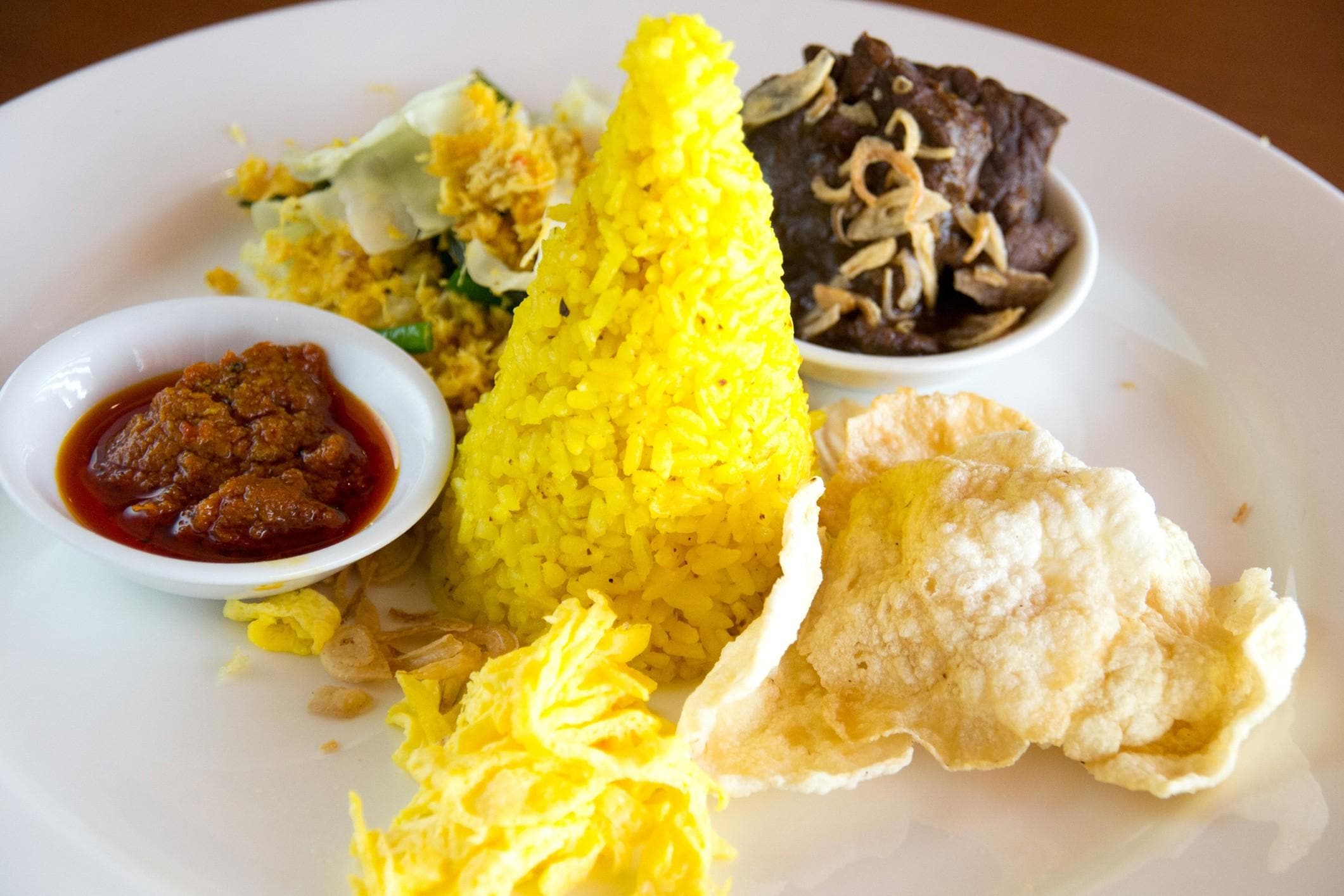
Nasi kuning, or Indonesian yellow rice, is one of the country’s most recognisable celebratory foods. Rice cooked with turmeric, coconut milk and fragrant herbs becomes golden, aromatic and an appealing centrepiece for birthdays, ceremonies and community gatherings. This guide explores the cultural symbolism, regional serving traditions, cooking principles and food-safety considerations for international travellers who want to understand—or prepare—a plate of nasi kuning.
What Is Nasi Kuning?
The name literally means “yellow rice”. Turmeric is responsible for the colour, while coconut milk, lemongrass and aromatic leaves can give the rice a rich savoury flavour. Spices and exact proportions vary across households and regions, so no one recipe should be presented as the only authentic version. Rice is important across many Indonesian communities; see the Indonesia culture guide and Indonesia’s regional geography.
Why Is Yellow Rice Served on Special Occasions?
The symbolism of colour and prosperity
The golden appearance is often associated with good fortune, gratitude, abundance and hope. These meanings should be explained as common cultural associations rather than rigid beliefs shared by everyone in Indonesia. Local practices differ among religious and regional communities. Read Indonesian rituals and the country’s historical traditions.
Nasi tumpeng and communal celebrations
At some gatherings, yellow rice is shaped into a cone as part of tumpeng, placed with side dishes and shared ceremonially. Tumpeng also appears with white rice and other variations, so nasi kuning and tumpeng are related but not identical terms. For the wider culinary landscape, see 12 favourite Indonesian dishes.
Key Ingredients in Nasi Kuning
Rice and coconut milk
White rice is commonly used, with coconut milk adding richness and texture. Local cooks may vary the grain, use a mixture with glutinous rice or adapt coconut levels for dietary needs. When cooking at home, use food-safe ingredients and correctly measure the liquid for the chosen rice type.
Turmeric and fragrant herbs
Fresh turmeric or turmeric powder creates the colour. Lemongrass and fragrant leaves, such as daun salam, can contribute aroma. Garlic, shallots, salt and additional spices depend on the recipe. Some flavouring leaves are removed before serving.
What if you have allergies?
Coconut and some side-dish ingredients can be important allergens for individual diners. Rice itself may be suitable for many diets, but the complete dish might include egg, shrimp, fish paste or meat. Check ingredients carefully before ordering.
How to Cook Nasi Kuning at Home
Step 1: Prepare the rice and aromatics
Rinse the rice according to your chosen method. Prepare a turmeric mixture, coconut milk, lemongrass and other aromatics. Choose a trustworthy tested recipe for exact ratios, because different rice varieties need different quantities of liquid.
Step 2: Cook gently and evenly
Cook in a rice cooker or a suitable pot, ensuring the grains are fully cooked and any coconut mixture is heated adequately. If using a stovetop, avoid scorching the bottom and check the rice before serving.
Step 3: Serve with complementary dishes
Common accompaniments include shredded chicken, sambal, sliced cucumber, eggs, tempeh, fried noodles, serundeng or other savoury vegetables. There is no obligation to add every topping. For other recipes visit home-cooked Indonesian food and seven Indonesian breakfasts.
Regional Variations and How to Eat It
Breakfast stalls and home kitchens
Small cafés and market vendors may sell individual parcels or plated yellow rice in the morning. Check that cooked rice is kept at safe temperatures and that toppings are protected from contamination. For more everyday convenience foods see Indonesia’s Indomie noodles and popular satay styles.
Celebratory plates and communal gatherings
At ceremonies, follow the host’s cues when a cone-shaped tumpeng is presented or cut. Never treat family or religious practices solely as a food-photo opportunity. Elsewhere in the archipelago, different rice and spice traditions appear; Manado cuisine and Minangkabau rendang show the contrast.
What to Order with Nasi Kuning
A sweet or creamy dessert after a savoury rice plate can be a welcome contrast, but portion sizes and nutritional needs differ. Try Indonesian iced desserts or regional coffee drinks where available.
Food Safety for Rice-Based Meals
Cooked rice should not sit at room temperature for extended periods, because bacteria such as Bacillus cereus can grow and reheating may not eliminate every toxin. Refrigerate leftovers promptly and use a reputable vendor who handles prepared food safely. For travellers see our Indonesia food and travel safety guide and budget with the rupiah payment guide.
Frequently Asked Questions
Is nasi kuning always spicy?
Not necessarily. Heat often comes from optional sambal or side dishes.
Is nasi kuning the same as tumpeng?
No. Nasi kuning is yellow rice; tumpeng is a style of presentation that may use yellow or other rice.
Can vegetarians eat nasi kuning?
Potentially, if the rice and toppings contain no animal products and are prepared appropriately. Ask the cook.
Authoritative References
- Wonderful Indonesia — Indonesian food culture and nasi kuning
- WHO — food safety and safe preparation
Original source URLs
- www.indonesia.travel/content/indtravelrevamp/gb/en/destinations/sulawesi/manado.html
- www.indonesia.travel/content/indtravelrevamp/gb/en/destinations/kalimantan.html
- www.indonesia.travel/content/indtravelrevamp/gb/en/destinations/bali-nusa-tenggara/bali.html
For broader destination inspiration, read the Indonesia travel overview.