Ayung River rafting near Ubud is one of Bali’s most popular ways to see the island’s tropical river landscape, dramatic rock reliefs and forested valleys from a different perspective. It’s accessible to many first-time rafters when conditions are suitable, but “beginner-friendly” must never be mistaken for “risk-free.” This updated guide explains five reasons visitors love the Ayung, who should take part, what to wear and how to choose a safety-conscious operator.
Why raft on the Ayung River?
The Ayung runs through a varied landscape of forest, villages and river gorges north of Denpasar and around Ubud. Commercial rafting sections vary by provider, river level and access point, so a quoted length or duration cannot apply to every trip. Alongside the popular Ubud attractions, rafting offers a different kind of experience. For a wider view of nature travel, read Indonesia’s ecotourism guide.
5 reasons to choose Ayung River rafting
1. Convenient access from the Ubud area
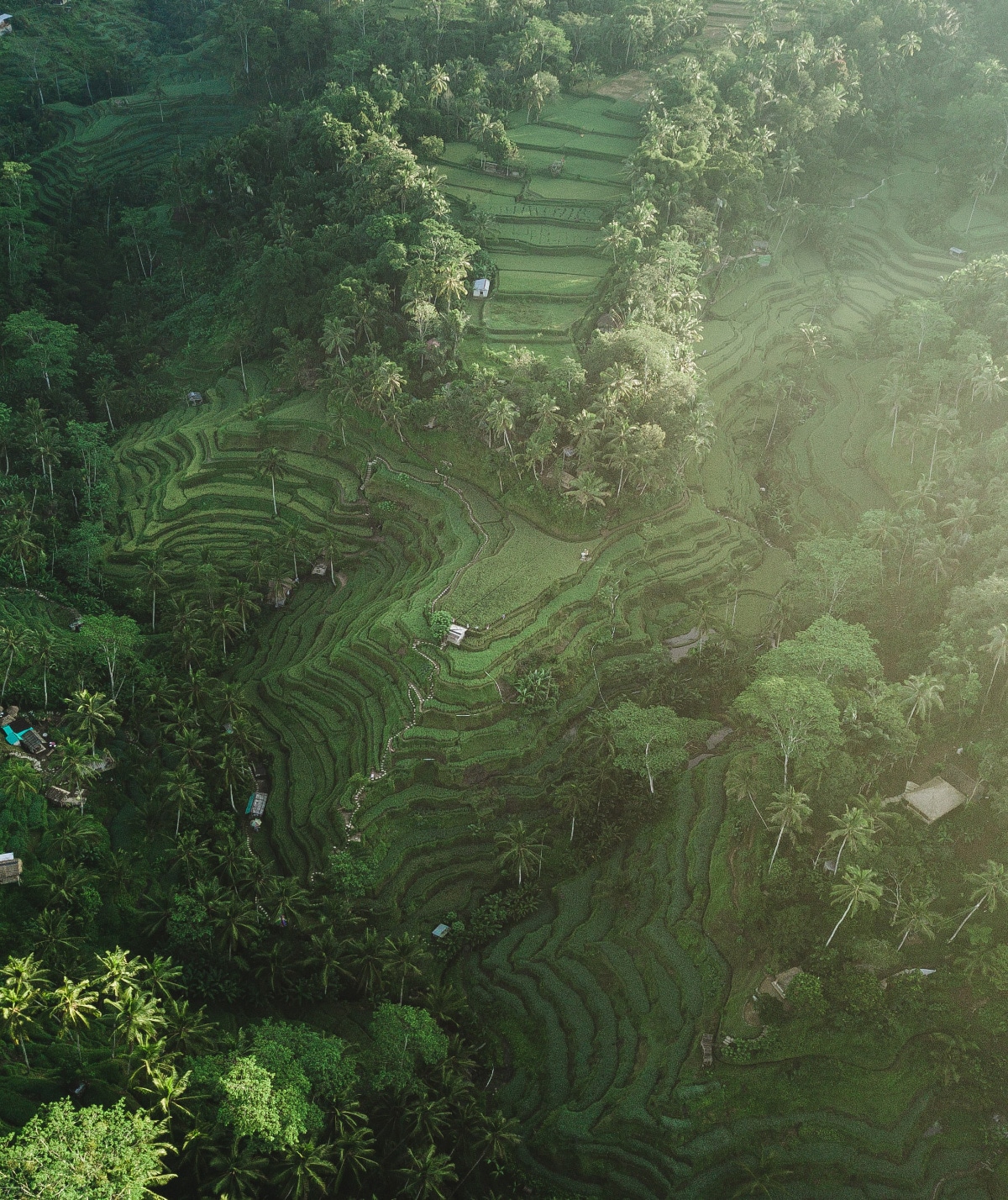
Many commercial departure points are within driving distance of central Ubud, including areas around Kedewatan and Payangan. Operators may offer accommodation pickup, but traffic and the exact launch point determine the real travel time. A rafting trip can form the main activity of an Ubud day without crossing the entire island. Plan a separate visit to Tegallalang Rice Terrace rather than cramming too much into one schedule.
2. An approachable white-water adventure in suitable conditions
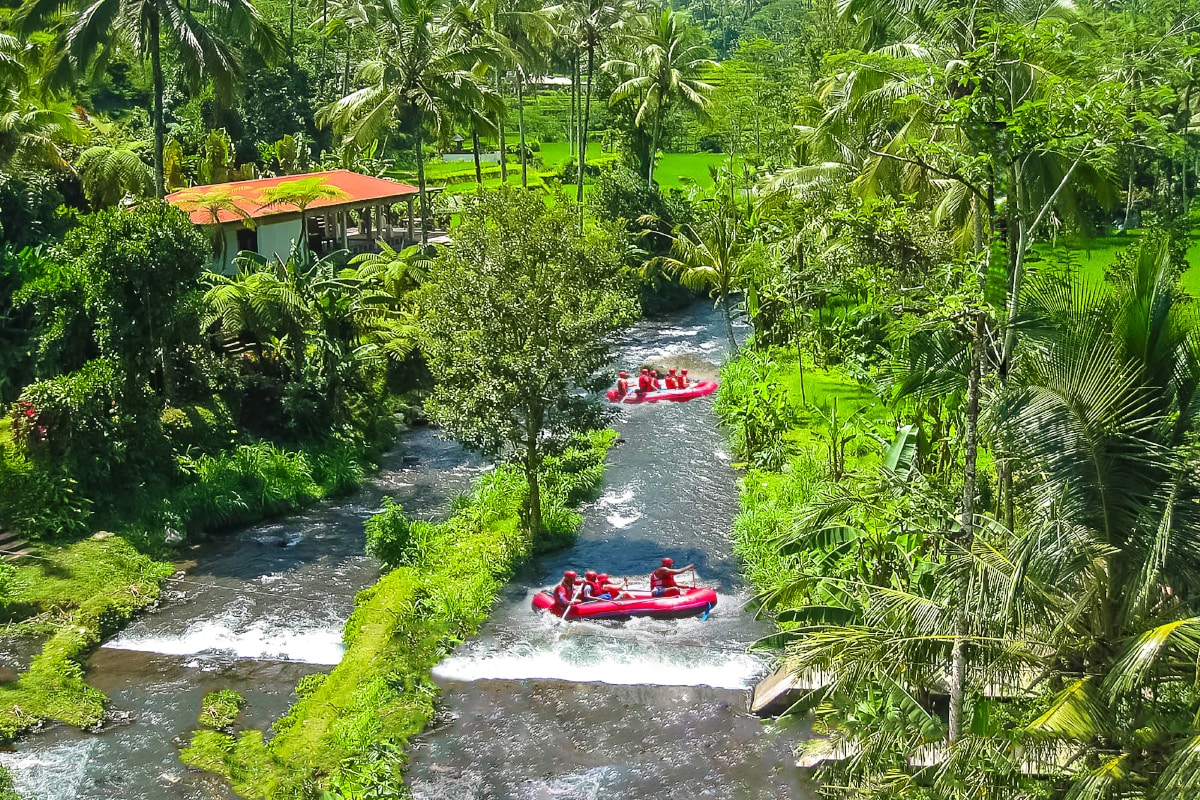
The standard commercial route is commonly marketed as roughly grade II–III white water, depending on the rapid classification and flow. That describes a typical recreational route, not a guarantee that all water conditions are safe. River levels can rise rapidly after upstream rainfall; competent operators should postpone or cancel trips when levels, currents or forecasts are unsafe. Families should verify minimum ages, swimming requirements and fitness rather than assuming everyone may join. Compare other Bali adventure activities for alternatives suited to different abilities.
3. Beautiful jungle scenery and carved river walls
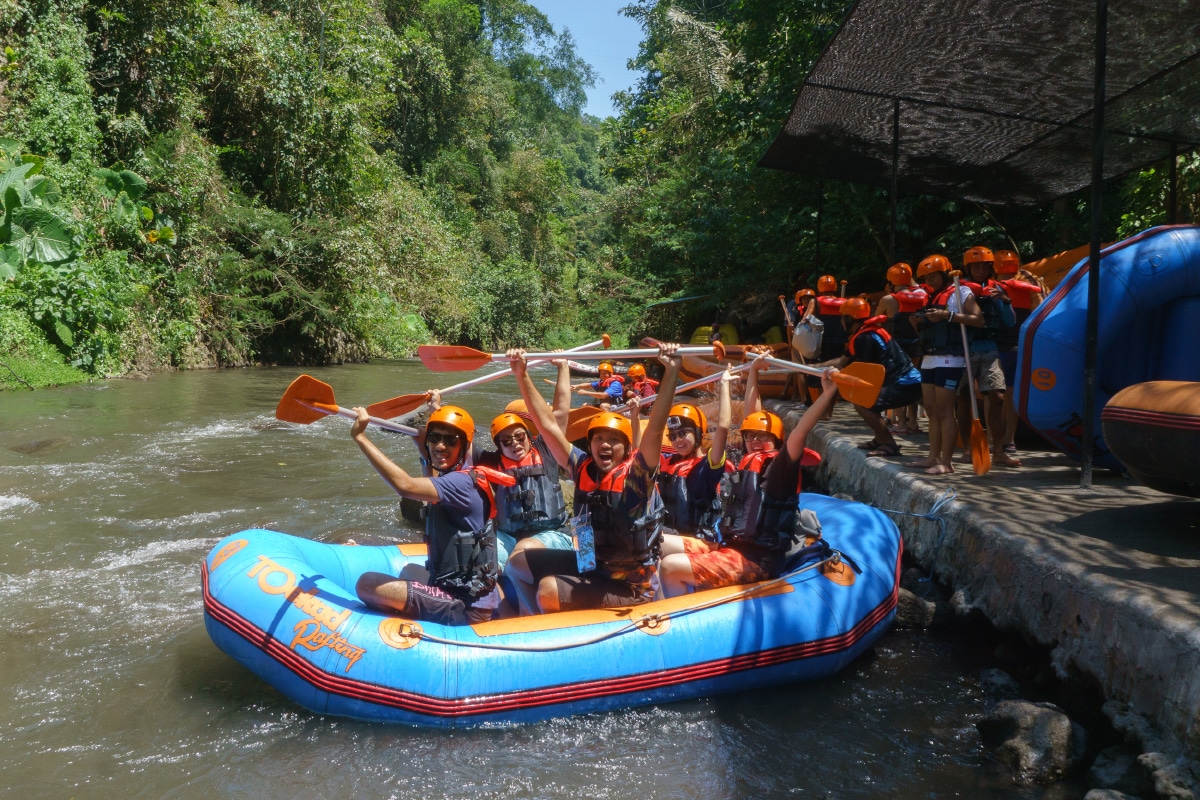
Some Ayung rafting sections pass forested cliffs, small cascades and stone reliefs depicting Balinese motifs. Whether you see every popular photo location depends on the operator’s chosen stretch and current restrictions. Observe wildlife from the raft without attempting to approach or feed animals. For a different highland perspective, consider Bali’s scenic rice fields.
4. Shared teamwork and an active break
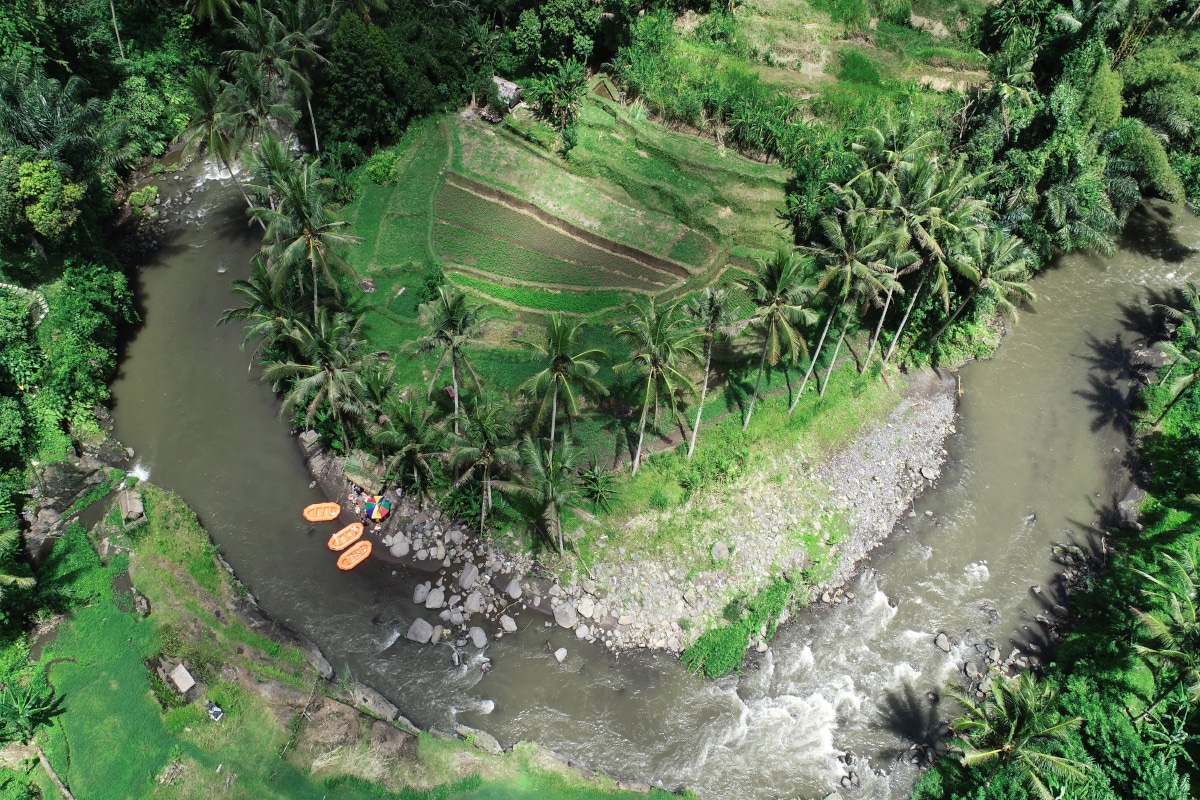
Following a trained guide’s paddle commands can make rafting a satisfying activity for small groups and families. The experience also requires concentration: listen to the safety briefing, hold the paddle correctly and stay seated as directed in rapids. Groups travelling with older relatives, children or guests with injuries should seek the operator’s medical and age eligibility rules. A slower alternative is a cultural village visit.
5. Memorable photography without unsafe stunts
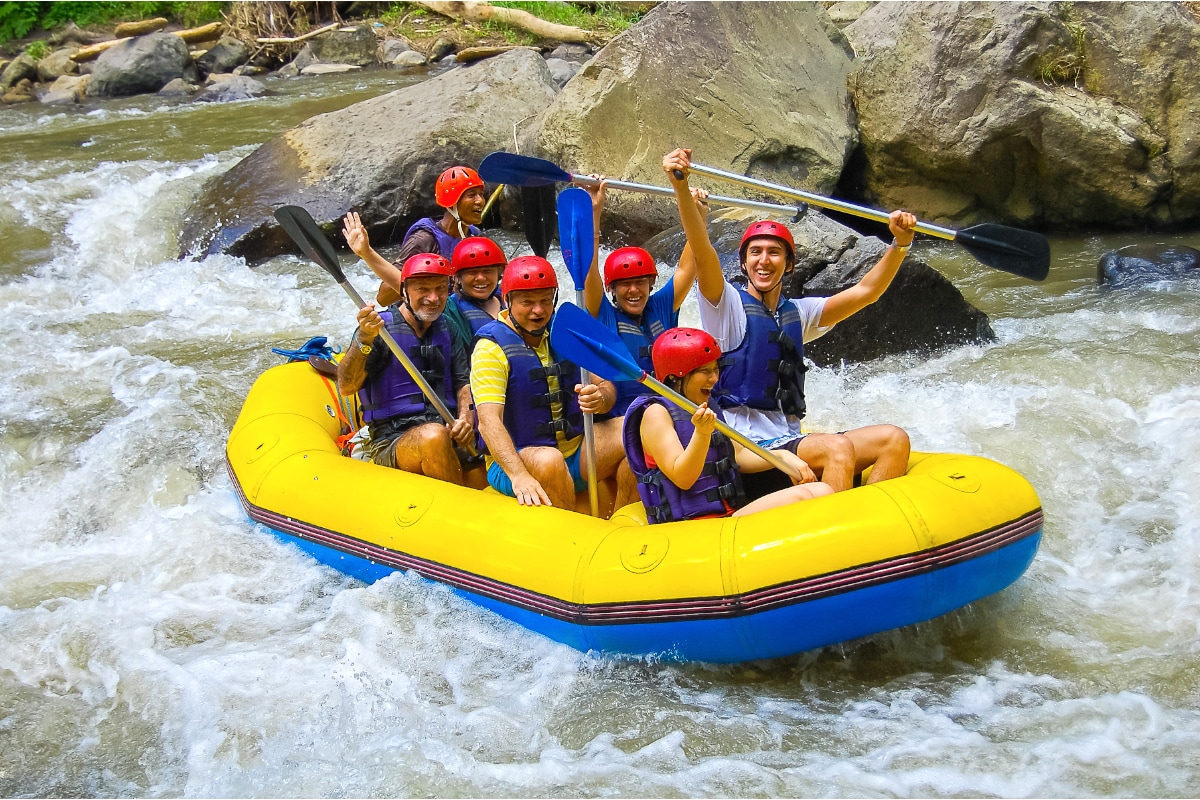
Photographs of river valleys and waterfalls are popular, but never stand up in moving water or distract your guide for a picture. Ask the operator whether professional photography is included and how photos are delivered. A waterproof pouch is useful, although fragile electronics may be better left in secure storage. For scenic photography after the activity, visit Bali’s temples with appropriate etiquette.
How safe is Ayung River rafting?
Equipment and operator standards
Book a legitimate company that provides a properly fitted helmet, a buoyancy aid or life jacket, river-appropriate raft, guide, first-aid capability and an emergency plan. Ask how often equipment is inspected and whether guides know local rescue procedures. A cheap price means little if the operator cannot explain safety precautions. Review general Indonesia travel safety before participating.
Weather, river levels and cancellations
Sudden upstream storms can create hazardous conditions even when the launch area looks dry. Follow actual river status and trained staff, not an evergreen claim that rafting operates safely in every season. The Bali weather overview helps with planning, but same-day operator decisions take precedence. Never pressure guides to depart when they have suspended trips.
Children, pregnancy and medical conditions
Minimum age, maximum weight and contraindications differ by operator, river level and insurance. Rafting is generally inappropriate for pregnant visitors and may be unsuitable for those with serious back, neck, heart or other conditions. Ask a qualified healthcare professional and the operator when concerned, and disclose relevant limitations honestly.
What happens on a typical Ayung rafting trip?
Check-in, safety briefing and river access
Most packages include changing facilities, guide instructions, equipment fitting and a walk or stairs down into the gorge. Access steps can be strenuous—something promotional videos sometimes omit. Ask specifically about the number of steps if anyone in your group has mobility limitations.
Time on the river
Trips commonly involve a few hours overall, but actual paddling time, breaks and the route vary. Some companies offer lunch and transfers; others charge separately. Ask whether your booking includes insurance, towels, lockers, photos, taxes and return transport.
After rafting: explore Ubud responsibly
Enjoy a meal, dry clothes and travel back without overloading the day. If you still have energy, investigate other Bali tours or a shorter Bali itinerary. Travellers who want a relaxed meal can compare vegetarian restaurants around Bali.
Ayung versus Telaga Waja: which river should you choose?
Ayung is often chosen for its Ubud access and relatively approachable commercial sections; Telaga Waja, in eastern Bali, can offer a longer and sometimes more energetic rafting character depending on water conditions and operator. Neither is automatically suitable for every beginner, and river grading is never a substitute for local advice. Compare the operator’s exact route, fitness expectations, maximum river level and insurance exclusions.
What to pack and how to budget
Wear secure footwear that can get wet, swimwear or quick-drying clothing, and bring a change of clothes. Avoid dangling jewellery or loose items. Pay attention to helmets and life jackets. Prices differ greatly by transfer location and package, so avoid outdated “2026 fixed price” claims and request a written inclusive quote in rupiah. Check our Indonesia currency guide before paying.
How to include rafting in a Bali holiday
Rafting is best as a substantial half-day or day activity. On separate days, visitors might explore North Bali’s attractions, shop around Bali’s markets or enjoy a slower stay near Canggu. Overseas travellers can review the updated Indonesia visa guide before arrival.
Frequently asked questions
Can first-time visitors raft on the Ayung?
Often yes, when conditions are suitable and a licensed operator accepts their age, fitness and experience. The guide’s safety assessment comes first.
Is rafting safe in the rainy season?
No season guarantees safety. Upstream rainfall and river-level assessments determine whether a specific departure should go ahead.
Do I need to know how to swim?
Requirements vary by operator and conditions. Always disclose your swimming ability and ask what safety support is provided.
Does the price include transportation?
Some packages do; others don’t. Confirm the exact hotel pickup zone, lunch, insurance and photo fees.