Indonesia’s remarkable mosques demonstrate centuries of local history, religious architecture and community life. This guide introduces eight grand mosques across Indonesia, from Aceh and Padang to Jakarta, Semarang and East Java, and explains how international travellers can appreciate them respectfully. These buildings are primarily places of worship, so visitor etiquette matters more than capturing the perfect photograph.
Why is mosque architecture so varied in Indonesia?
Indonesia’s Muslim communities have developed architecture influenced by local building materials, regional design, maritime trade and the wider Islamic world. Not all mosques have domes, and not all building styles mean the same thing. Read our guide to Indonesia’s religions and cultures and Indonesia’s diverse regions to understand the cultural setting.
Eight grand mosques to appreciate
1. Baiturrahman Grand Mosque, Banda Aceh — Aceh

The Baiturrahman mosque complex is central to Banda Aceh’s religious and civic heritage. It is remembered for surviving the 2004 Indian Ocean tsunami, although the disaster devastated surrounding communities. Its history includes nineteenth-century conflict and later architectural rebuilding; the current expansive grounds and umbrellas reflect subsequent changes as well.
Visitor etiquette
Photography and walking access can be restricted during prayers, religious events and maintenance. Modest dress and respect for Aceh’s local rules are essential.
To understand community customs beyond architecture, read Indonesian ceremonies and traditions.
2. Great Mosque of Palembang (Sultan Mahmud Badaruddin I Jayo Wikramo) — South Sumatra
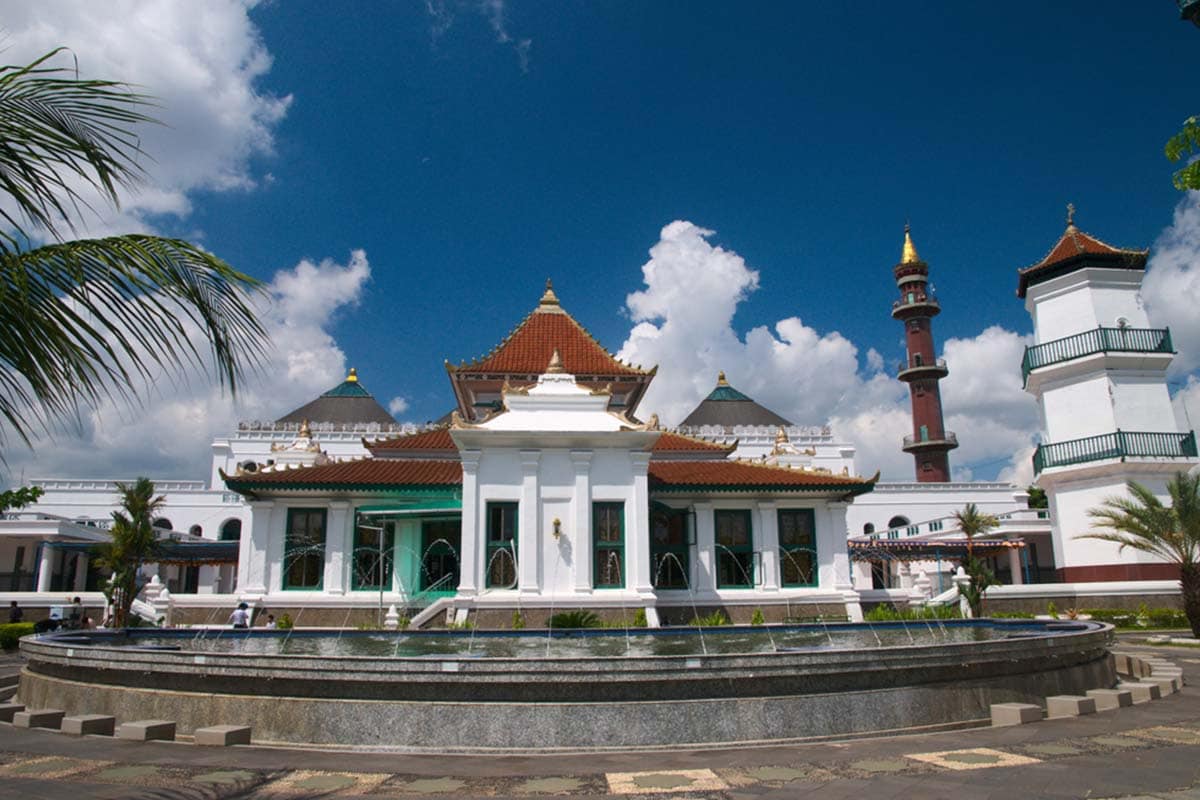
The mosque’s history links to the Palembang Sultanate, with architecture incorporating local, Chinese and other stylistic influences. Buildings have been enlarged and renovated over time; visitors should not treat the complete current structure as unchanged since its earliest construction.
Visitor etiquette
Combine a respectful religious visit with learning about Palembang’s trading past, and avoid entering during worship without permission.
3. Grand Mosque of West Sumatra (Masjid Raya Sumatera Barat) — Padang, West Sumatra
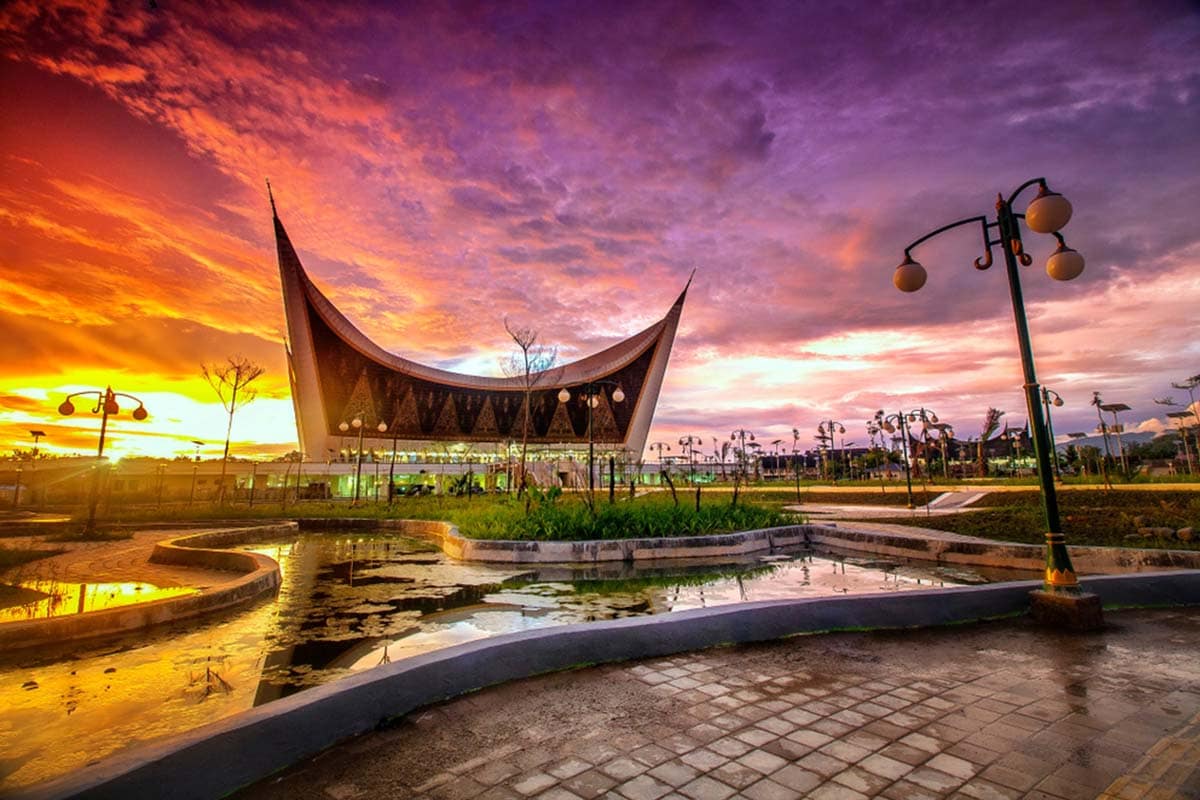
This mosque is recognised for its roof form drawing on Minangkabau rumah gadang architecture rather than a conventional large dome. The design connects contemporary Islamic worship to regional identity. Describing it only as an Instagram location overlooks its role in Padang’s active community.
Visitor etiquette
Ask staff about visitor areas and any dress restrictions. A mosque is a place of prayer first, not a freely accessible rooftop viewpoint.
Roof shapes are more meaningful with Indonesian traditional-house architecture as context.
4. An-Nur Grand Mosque, Pekanbaru — Riau
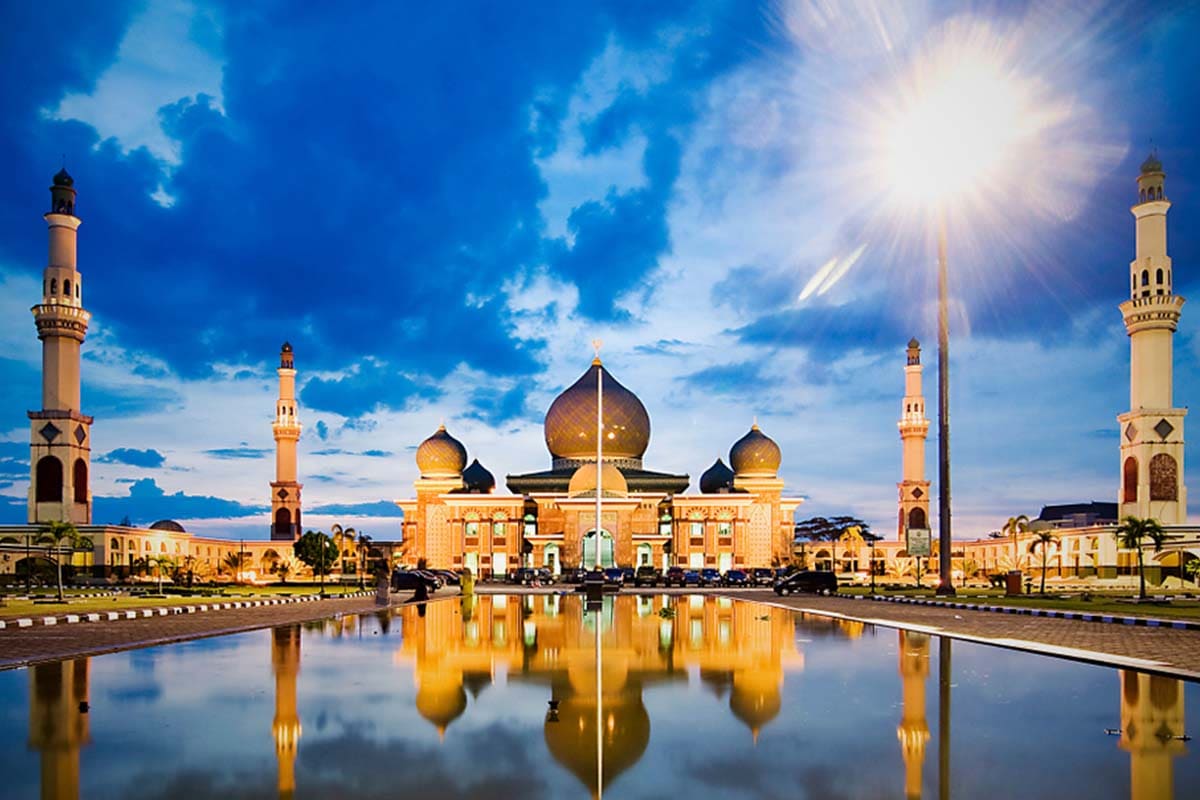
An-Nur’s expansive layout and domed composition make it a prominent Islamic landmark in Pekanbaru. Older descriptions sometimes compare its appearance with famous Indian monuments, but visual resemblance should not be confused with a documented architectural connection.
Visitor etiquette
Confirm permitted hours and visitor entrances. Respect religious study sessions and quiet prayer spaces.
5. Istiqlal Mosque, Jakarta — Jakarta
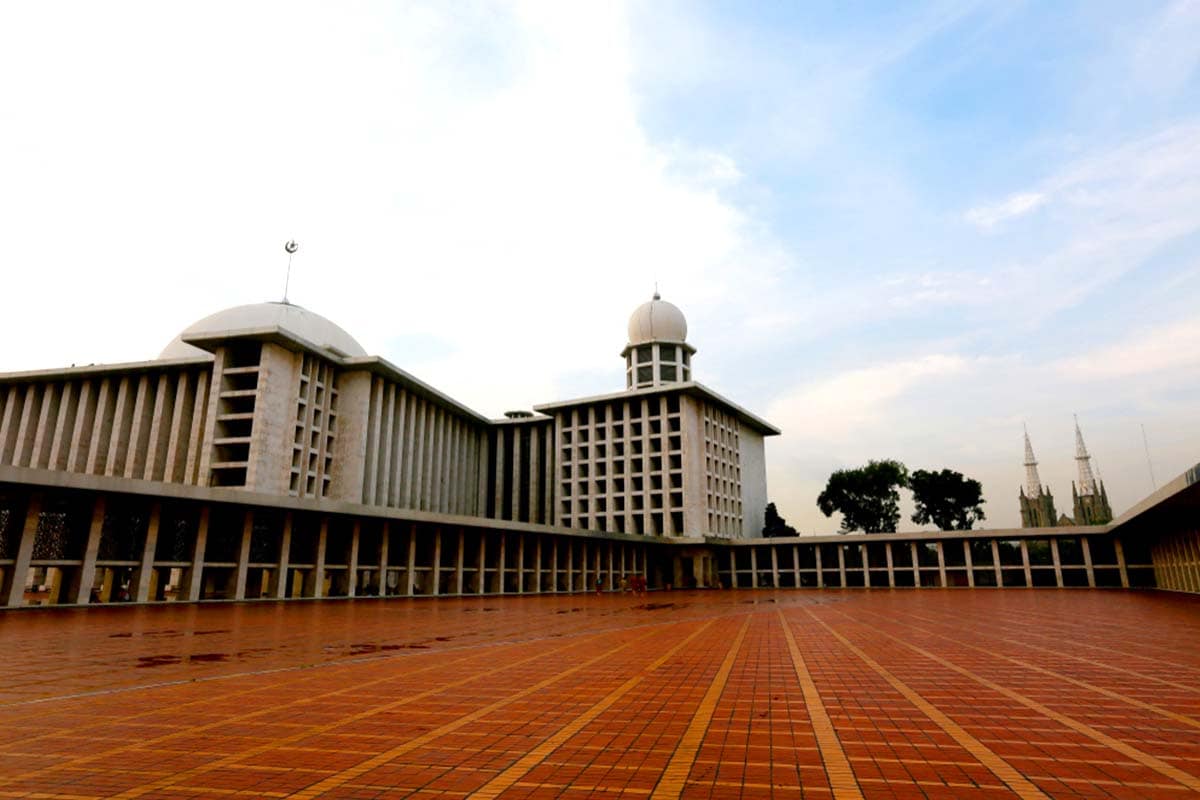
Istiqlal is Indonesia’s national mosque, positioned near Jakarta Cathedral in Central Jakarta. Its modern monumental design is linked to the nation’s post-independence story. The nearby cathedral illustrates how two different religious sites coexist in the civic landscape, while their visiting rules remain separate.
Visitor etiquette
The mosque has organised visitor arrangements, including guides for many non-Muslim visitors. Check the official rules, dress appropriately and avoid worship areas during services.
Jakarta visitors can also explore major Jakarta landmarks and Indonesia’s religious architectural heritage.
6. Great Mosque of Central Java (Masjid Agung Jawa Tengah) — Semarang, Central Java
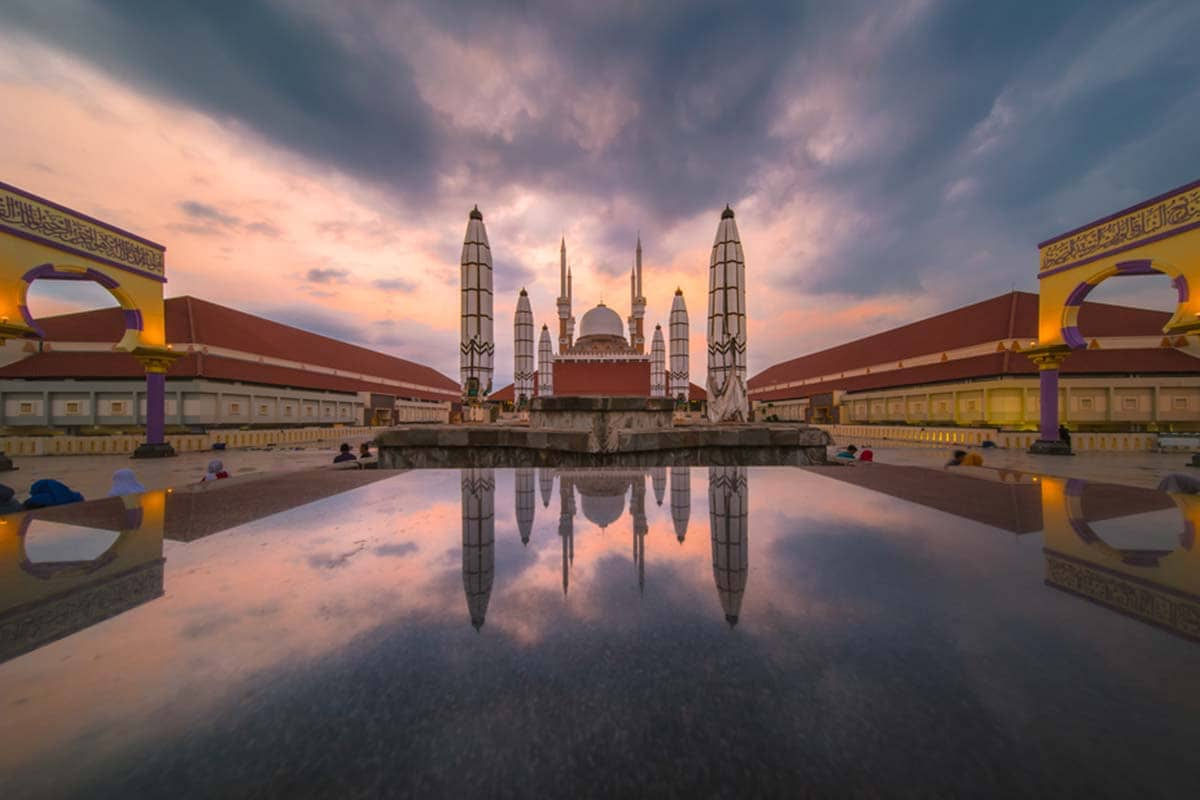
Semarang’s grand mosque is recognised for its architectural blend, broad courtyard and monumental umbrellas. Facilities and tower visitor arrangements can change, so older claims about free access to every viewpoint should be verified. Its functions include prayer, education and community life.
Visitor etiquette
Check tower openings and admission policies directly; public sightseeing should never interrupt prayer.
7. Tuban Grand Mosque — Tuban, East Java
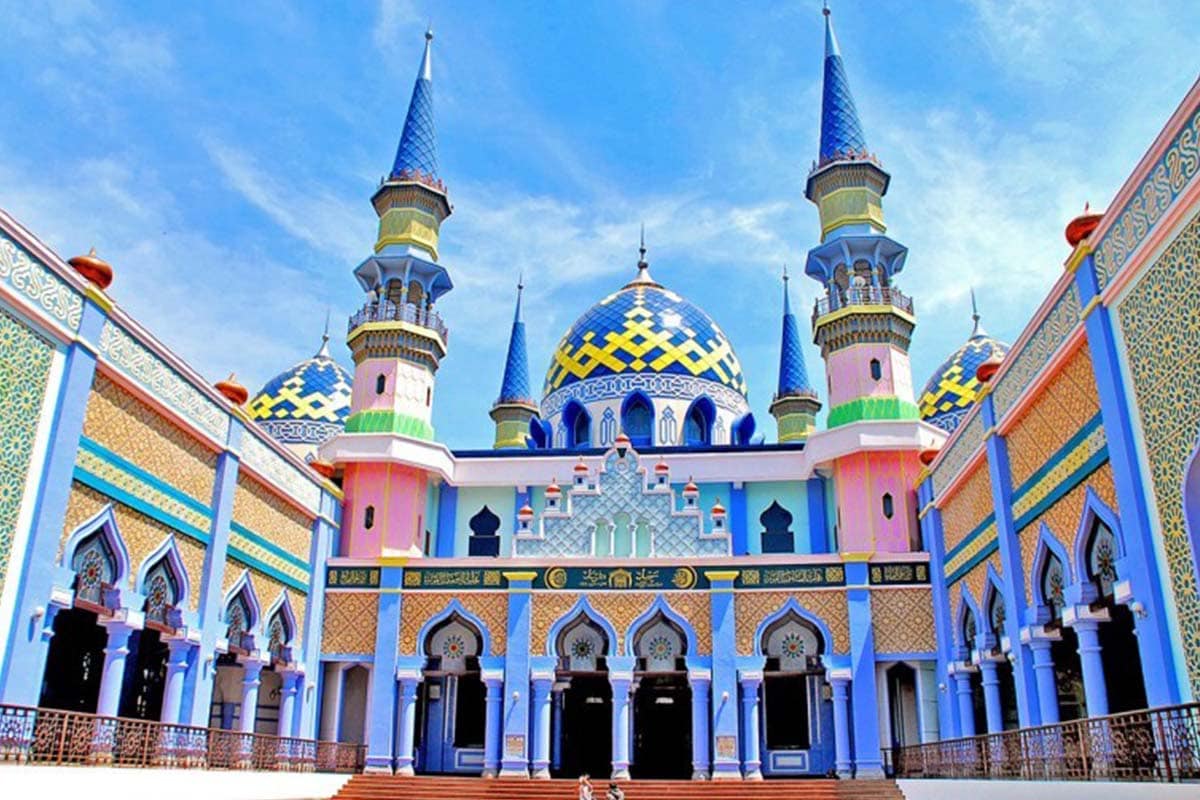
Located in Tuban on Java’s north coast, the grand mosque reflects the city’s significant Islamic heritage. Tuban is associated with historical coastal trade and the spread of Islam in Java. Renovated buildings may reflect several eras, making a local historical guide valuable.
Visitor etiquette
Respect access to religious areas and check if photography is appropriate. The mosque is not an entertainment venue or a guaranteed all-hours photo opportunity.
For a longer journey through Java, see East Java highlights.
8. Kediri Grand Mosque — Kediri, East Java
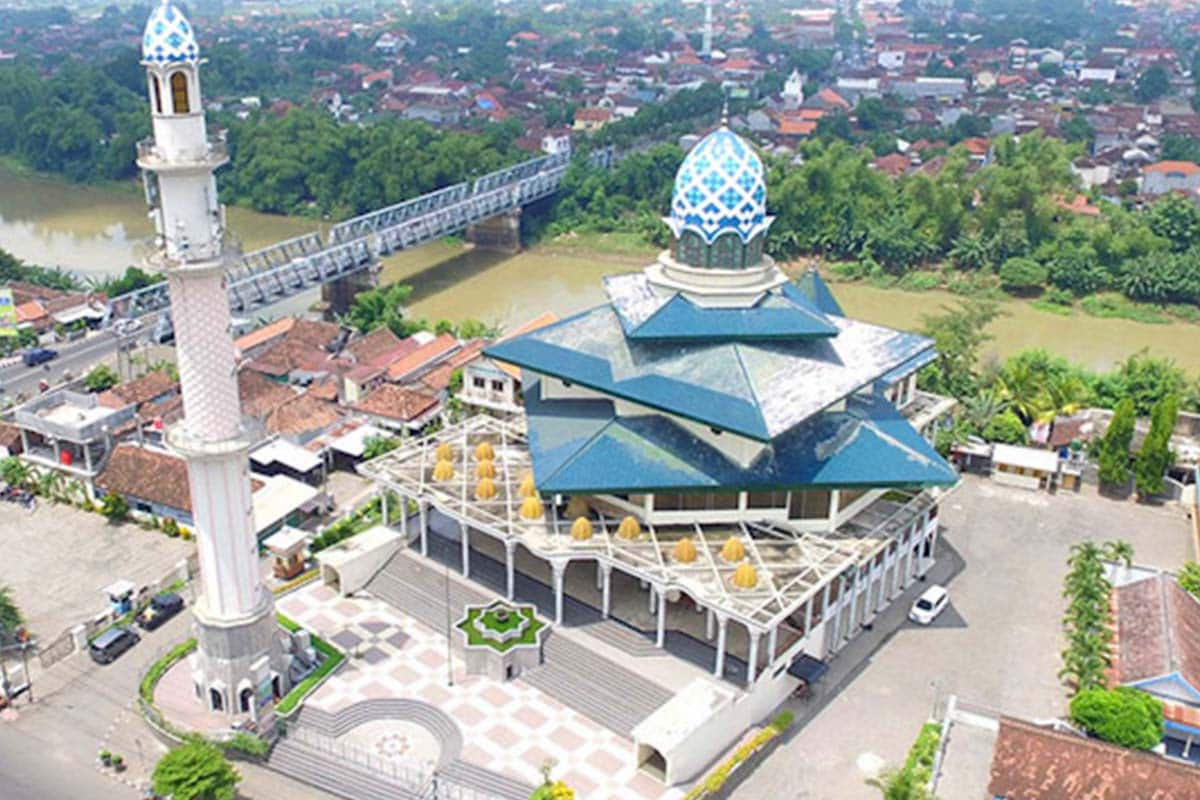
Kediri’s central grand mosque stands near the city’s civic square and river landscape. Its modern form followed significant rebuilding completed in the 2000s, while the mosque’s historical roots are older. The blend of regional and broader Islamic architectural influences makes it a worthwhile heritage stop.
Visitor etiquette
Combine a short exterior architecture visit with an understanding of Kediri’s civic history; check opening and prayer times before entering.
How to visit a mosque as an international tourist
Dress modestly and follow local rules
Many Indonesian mosques require visitors to dress conservatively, remove shoes before entering carpeted prayer areas and respect male and female spaces where designated. Some offer robes or head coverings. A building may welcome tourists but close sightseeing during prayers or religious events. Always follow instructions from mosque staff.
Prayer times, photography and guided tours
Do not interrupt worshippers, photograph people without permission or use drones over religious buildings without authorisation. If the mosque offers an official visitor programme, join it. Public architecture tours should never be mistaken for access to worship-only areas. Our Eid al-Fitr traditions guide provides context for busier religious periods.
Understand local faith traditions
Islam is the majority faith in Indonesia, but local traditions differ widely among provinces. Religious sites may be active community education centres, and nearby churches or temples have their own visitor etiquette. A cultural day could also include regional batik heritage or local workshops, when geographically practical.
Build a realistic mosque-heritage itinerary
A day in central Jakarta
Istiqlal and neighbouring heritage areas make a compact cultural experience. Combine a properly timed guided visit with city museums and food, rather than travelling across multiple distant mosque sites. For wider sightseeing compare Indonesia travel inspiration.
Sumatra’s distinct regional traditions
Banda Aceh, Palembang, Padang and Pekanbaru are far apart and require separate planning. A multi-city Sumatra itinerary needs flights or long overland journeys, not a single-day bus tour. Check current airport connections and local holiday schedules.
Central and East Java
Semarang, Tuban and Kediri can be part of a wider Java trip. Allow time for historic centres and cultural activities rather than rushing between sacred buildings. our Yogyakarta travel guide and community tourism lessons provide broader cultural context.
Safety and practical details
Entrance rules can change during Friday congregational prayers, Ramadan and Eid, and transport can become busier during major religious holidays. Bring a modest scarf or layer, carry rupiah and respect restrictions on private areas. See Indonesia money and payment advice, time-zone basics and traveller safety guidance.
Frequently asked questions
Can non-Muslim visitors enter Indonesian mosques?
Some welcome guided non-Muslim visitors, while others limit access. Always confirm local policies.
Do tourists need to cover their heads?
Requirements vary by site; many provide appropriate coverings. Follow local staff instructions.
Is Istiqlal next to Jakarta Cathedral?
They are close together in Central Jakarta and have separate visitor and worship rules.
Is every mosque free to photograph?
No. Photography restrictions and permissions differ, especially during services.