Eid al-Fitr in Indonesia is usually called Idulfitri or Lebaran. It marks the end of Ramadan, the Islamic month of fasting, and is a major period of prayer, family visits, shared meals and community generosity. For overseas visitors, it can be a memorable time to learn about Indonesian hospitality—but it also brings exceptionally heavy domestic travel demand and altered business hours. Here is a practical guide to how the celebration works, what its traditions mean and how to travel considerately.
When is Eid al-Fitr celebrated in Indonesia?
Eid begins on 1 Shawwal in the Islamic lunar calendar. Its date shifts by roughly 10–11 days earlier each Gregorian year and depends on religious calculation and moon-sighting decisions. For 2026, the Indonesian government announced 21 March 2026 as 1 Shawwal 1447 H; future dates should be checked through official announcements rather than hard-coded years in travel guides. Local organisations may follow different religious methods. See Indonesia’s three time zones and business and holiday hours when planning travel.
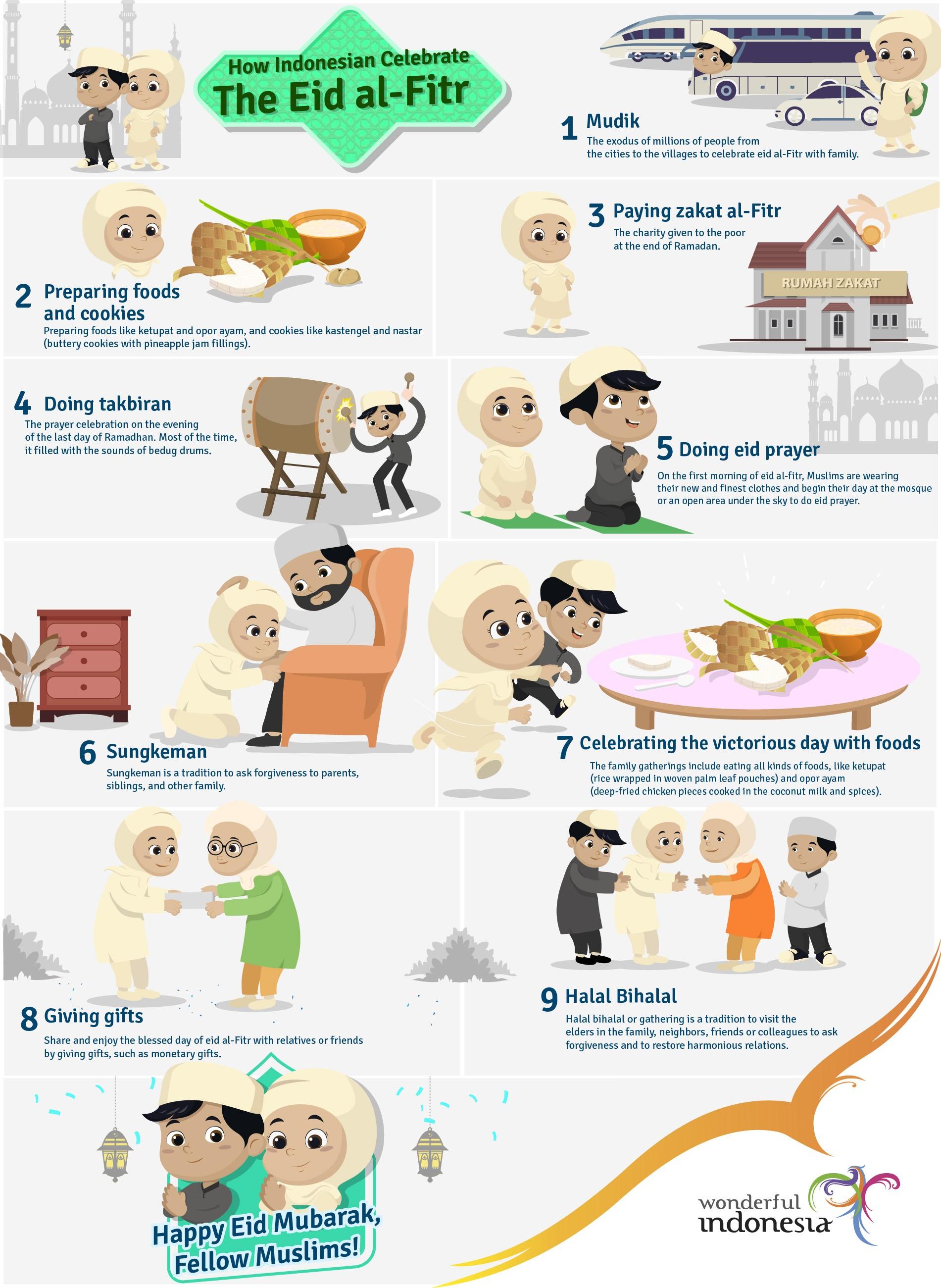
How Indonesians celebrate Lebaran

1. Eid prayers and the end of Ramadan
Many Muslims begin the morning with communal Eid prayers in mosques or designated open areas. Participants dress neatly, exchange greetings and give thanks. Tourists should not enter prayer areas without permission or take close photographs of worshippers. Indonesia is religiously diverse, and not all Indonesians celebrate Eid; learn more from our introduction to Indonesia’s faiths and cultures.
2. Mudik: returning to hometowns
Mudik describes the annual journey many people make from cities to their hometowns to reunite with relatives. Trains, domestic flights, highways, ferries and intercity buses can be very busy before and after the holiday. In March 2026 government agencies published special traffic management arrangements, underscoring how significant the travel peak can be. If you are planning your own trip, reserve early and allow generous time for journeys.
Practical transport advice for visitors
Do not schedule a tight connection between modes of transport around Lebaran. Confirm ticket conditions, ferry operations and possible traffic restrictions from official providers. For island transfers see our Indonesia seaport guide; for city activities see Jakarta’s main landmarks.
3. Silaturahmi, apologies and family visits
Relatives and neighbours visit one another, strengthening relationships and asking forgiveness for past mistakes. A common greeting is mohon maaf lahir dan batin, expressing a wish for forgiveness in outward actions and inner intentions. Social gatherings are sometimes described as halal bihalal, a particularly Indonesian expression of reconciliation and conviviality.
How to accept a Lebaran invitation
Arrive as arranged, dress modestly, follow the host’s footwear rules and let the family decide whether photographs are appropriate. Bring a small thoughtful gift if advised, and respect dietary and prayer customs. Other local celebrations are explained in our Indonesian traditions guide.
4. Ketupat, opor ayam and festive dishes
Food is central to many celebrations. Ketupat is compressed rice cooked in a woven palm-leaf pouch and often served with chicken in coconut gravy, beef dishes and vegetable sides. Families prepare different regional menus, so no single dish represents every Lebaran table. Some communities also celebrate Lebaran Ketupat days later with their own customs.
Which foods can travellers try?
If welcomed into a home, accept portions politely and ask about ingredients or allergies. You can also explore rendang from West Sumatra, Indonesian meals to cook at home and regional breakfast dishes.
5. Zakat al-fitr and community giving
Eligible Muslims give zakat al-fitr, a form of charity associated with the conclusion of Ramadan, under relevant religious guidance. Other giving and support for neighbours and family are also common. Avoid reducing this important social practice to a tourist activity or treating all giving as identical to tipping.
What should international tourists expect during Lebaran?
Busy roads and changing schedules
City centres may feel quieter on some Eid days while transport corridors remain extremely busy. Museums, attractions, restaurants and banks can operate special hours. Confirm each business directly instead of assuming that every shop is closed or open. Families staying in Jakarta can browse Indonesian dining options and traditional coffee experiences, subject to holiday availability.
Respectful behaviour in mosques and neighbourhoods
Observe religious services from designated areas only, dress modestly and ask before taking photographs. Some public festivities welcome all visitors, but private family gatherings do not. Indonesia also has significant Christian, Hindu, Buddhist, Confucian and indigenous spiritual communities; our church heritage guide provides wider context.
Money, accommodation and travel documents
Withdraw or exchange reasonable travel cash before major bank closures, while safeguarding cards and valuables. Accommodation prices and intercity tickets may rise during high demand. Check rupiah and card advice and Indonesia visa rules before booking. Follow general safety guidelines around crowds.
How regional communities celebrate differently
In parts of Java, neighbourhood visits, food sharing and local night-time celebrations are significant. In Sumatra, festivities may emphasise extended family visits, distinctive dishes and customary attire. Traditions vary within each island, and a respectful visitor should avoid treating Indonesia’s majority Muslim population as culturally uniform. Compare Indonesia’s regional homes and community heritage.
Can you visit Indonesia during Ramadan or Lebaran?
Yes. Respectful travellers can experience daily life, local hospitality and meaningful festive atmospheres. However, it is not the best season for a tightly scheduled multi-city road trip because travel patterns change. Some tourism businesses remain open, especially in resort areas, but each schedule is individual. For other travel styles see Indonesia’s travel themes and community-based village experiences.
Frequently asked questions
Does everyone in Indonesia celebrate Eid?
No. Islam is the majority religion, but Indonesia has many other religious and cultural communities.
Is Eid al-Fitr the same as Ramadan?
No. Ramadan is the fasting month; Eid al-Fitr is the celebration marking its conclusion.
Is Indonesia closed for Lebaran?
No, but many public offices and individual businesses have different schedules, and travel demand can be very high.
What does ‘mohon maaf lahir dan batin’ mean?
It expresses a sincere request for forgiveness, commonly exchanged with Eid greetings.