Rendang is one of Indonesia’s most recognisable dishes: beef slowly cooked in coconut milk, chillies and aromatic spices until the sauce becomes concentrated, dark and deeply savoury. It is especially associated with the Minangkabau people of West Sumatra, for whom preparing and sharing rendang is also part of family and ceremonial life.
Whether you first taste it in a Padang restaurant or attempt it at home, it helps to understand why rendang takes time, how the cooking stages differ and why a dry-looking finished dish still needs ordinary food-safety care. This guide explores the history, cultural significance, types and cooking method, and preserves the William Wongso-inspired recipe that appeared in the original article. For more Indonesian culinary context, see our guide to Indonesian food and regional dishes to try across Indonesia.
What Is Rendang, and Where Does It Come From?
Rendang—also called randang or rondang in Minangkabau usage—is both the name of a cooked dish and a term associated with the technique of slowly reducing a spiced coconut mixture. The best-known version uses beef, but families and regional cooks prepare variations with other proteins and ingredients. What gives it its character is the slow transformation of the sauce, not simply adding “rendang seasoning” to an ordinary stew.
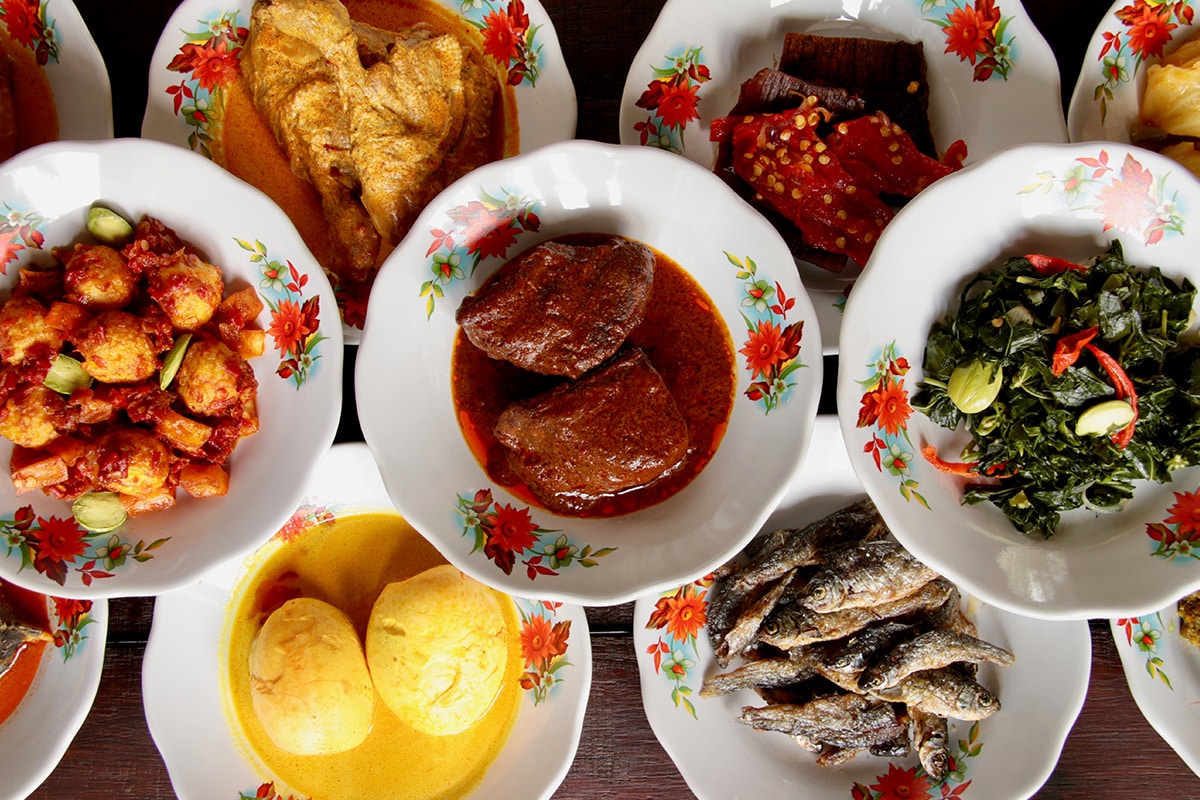
The dish comes from Minangkabau culinary traditions in West Sumatra, not exclusively the city of Padang. Padang-style restaurants helped introduce the cuisine across the Indonesian archipelago, alongside the Minangkabau practice of merantau—leaving one’s home region to work, study or settle elsewhere. The Indonesian Ministry of Culture’s national cultural heritage record for Randang identifies West Sumatra and documents its designation under Decree 238/M/2013.
Is Rendang a UNESCO Cultural Heritage Dish?
It is important to distinguish Indonesia’s own intangible-cultural-heritage register from UNESCO’s international lists. Rendang was designated Indonesian national intangible cultural heritage in 2013; that does not establish it as an individually inscribed UNESCO Representative List element. The government’s Indonesian intangible-heritage information provides the national context. Read about other Indonesian traditions and rituals for cultural background beyond cuisine.
Why Is Rendang So Famous Internationally?
Rendang has featured in international media polls and food rankings, including CNN Travel reader-choice coverage. Those lists reflect particular surveys and publication dates; they do not prove an objective, permanent title of “the world’s best food”. Its worldwide popularity is a more durable story: depth of flavour, the appeal of slow-cooked meat and the spread of Indonesian and Minangkabau restaurants. Our Indonesian speciality restaurants in Jakarta and Padang dining guide explain where travellers might explore that culinary tradition.
The Cultural Meaning of Rendang in Minangkabau Life
Food is part of community history. Rendang is associated with communal cooking, festive meals and traditional events, where the long preparation encourages planning and cooperation. Interpretations of its ingredients sometimes associate meat, coconut, chillies and spices with different parts of Minangkabau society. These are cultural explanations, not universal rules observed identically by every family.
The traditional cooking process rewards patience and attention: the cook adjusts heat, keeps the thickening coconut mixture from scorching and judges when the sauce has reduced sufficiently. In many families, cooking skills are shared across generations. This makes rendang more meaningful than a dish selected for a popularity ranking.
Different Types of Rendang
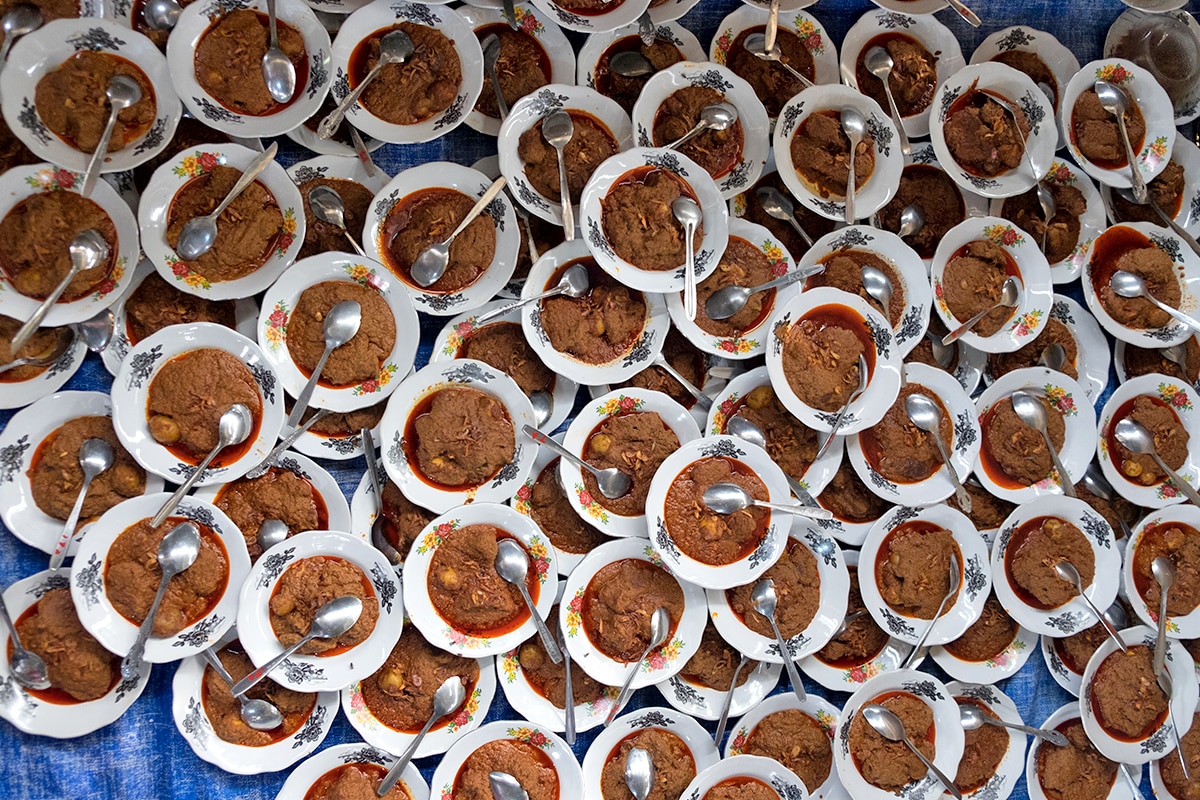
Beef Rendang
Beef is the most familiar version beyond West Sumatra. Chuck or other cuts suitable for slow braising can become tender during the long cooking process. Final texture and dryness vary by family recipe, batch size and desired serving style.
Chicken, Egg and Other Variations
Some Indonesian kitchens prepare rendang ayam (chicken), egg rendang, or regional versions using seafood or offal. These are not interchangeable cooking projects. Different meats need different safe cooking temperatures and durations; chicken, fish and beef should not be assumed to cook identically just because they use similar spices.
Gulai, Kalio and Dry Rendang
The stages are sometimes described as gulai, a still-liquid coconut sauce; kalio, a thicker and more oily reduced sauce; and rendang, where longer cooking removes more moisture and deepens the colour. The Indonesian tourism ministry’s official rendang overview describes this progression. The categories are useful for understanding the dish, but exact cooking hours are not fixed across all quantities and equipment.
How Rendang Gets Its Rich Flavour
Coconut Milk and Reduction
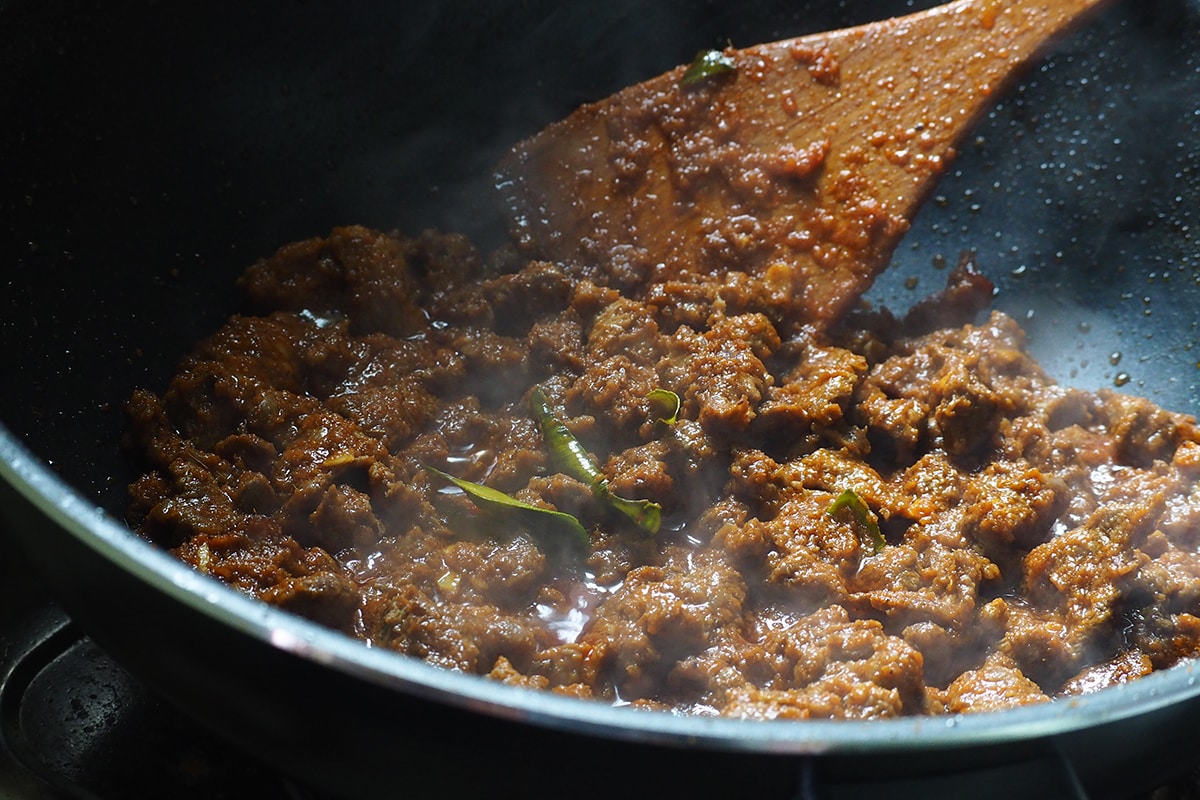
Rich coconut milk supplies fat and body. As the water evaporates, the sauce thickens and the oil separates; gentle heat and frequent stirring prevent the mixture from sticking. The resulting flavour is concentrated through reduction rather than relying on a single powdered spice.
Shallots, Garlic and Warm Aromatics
Shallots and garlic provide the base, supported by ginger, galangal, lemongrass, turmeric leaf, kaffir or makrut lime leaves, chillies and sometimes candlenuts. The combination changes across households. Fresh ingredients are ideal when available, but safe substitutions and careful seasoning matter more than rigidly insisting every supermarket carries exactly the same variety.
Why Patience Matters More Than a Fixed Timer
Some traditional rendang batches are cooked for many hours. A smaller domestic batch may reduce more quickly than a large ceremonial pot, depending on vessel width, moisture and heat. Use tenderness, the sauce’s reduction and safe food handling as guides rather than assuming that every rendang must cook exactly seven or eight hours.
William Wongso-Inspired Beef Rendang Recipe
The original article credits a recipe associated with Indonesian chef William Wongso, who also appeared with Gordon Ramsay in Gordon Ramsay: Uncharted. The ingredient quantities and the oven-then-pan method below are retained as a clearly attributed adaptation of the recipe published by Indonesia Travel. These instructions are for an adequately equipped home kitchen, not a guarantee of identical results to a traditional outdoor cooking process.
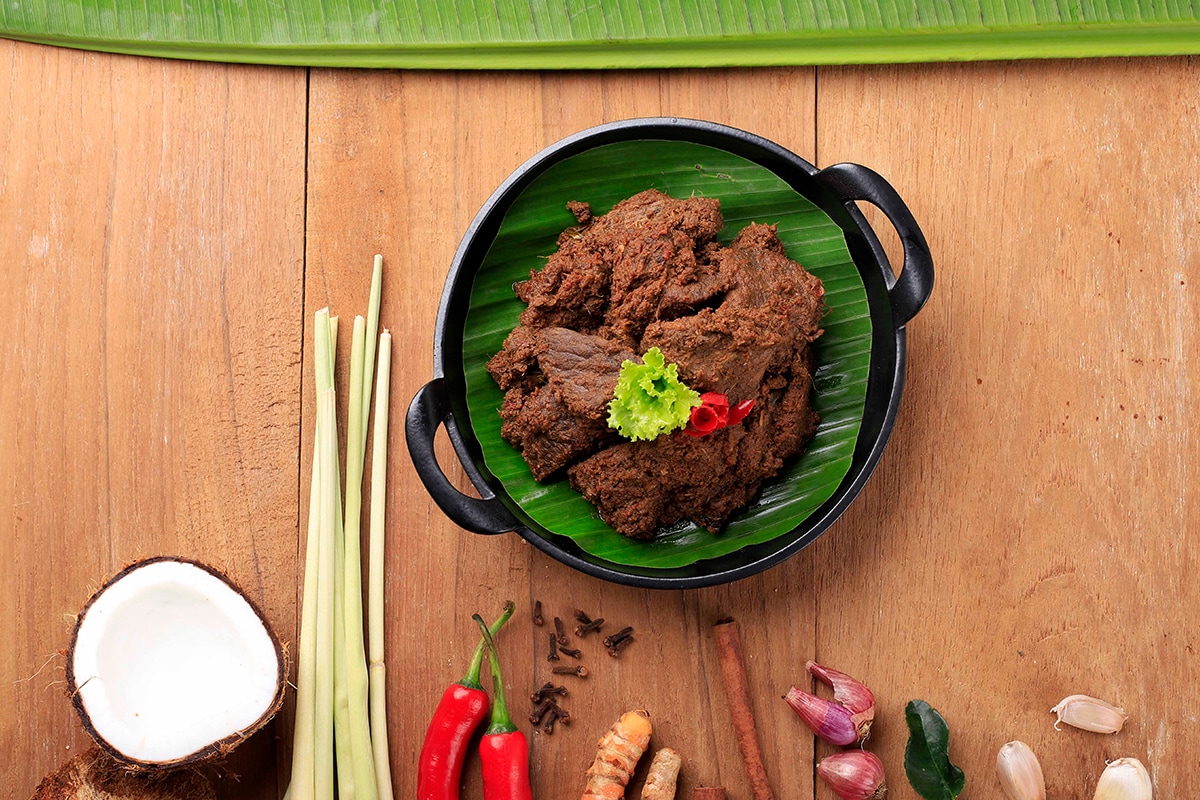
Ingredients for a Small Batch
- 500 g beef, cut into approximately 5 cm cubes, suitable for slow braising
- 1 turmeric leaf, or 2 Indonesian bay leaves where the recipe calls for a substitution
- 15 g tamarind
- 750 ml thick coconut milk, around 24% fat as in the source recipe
- 2 stalks lemongrass, lightly bruised
- 4 makrut lime leaves (also called kaffir lime leaves)
Spice Paste
- 120 g shallots, chopped
- 20 g garlic
- 125 g red chillies, deseeded if preferred
- 10 g ginger
- 30 g galangal
- 20 g candlenuts, ground and cooked as part of the recipe
Preparation note: the original source described onions in its English adaptation; the Indonesian version specifies bawang merah (shallots). Cooking equipment, spice strength and the chilli heat will influence the final flavour. Candlenuts must be thoroughly cooked rather than eaten raw.
Step-by-Step Cooking Instructions
- Prepare all aromatics and blend the shallots, garlic, chillies, ginger, galangal and candlenuts into a coarse paste. Have the meat, coconut milk, leaves and lemongrass ready.
- Cook the spice mixture gently in a suitable pan, adding the tamarind, lime leaves, lemongrass and coconut milk. Stir frequently while the mixture heats and begins to release coconut oil; do not let it scorch.
- Add the beef and combine until the pieces are coated. Bring the mixture to a controlled simmer.
- As in the credited recipe, transfer to an oven-safe uncovered pot and cook at approximately 120°C for around 1½–2 hours, checking regularly and adjusting liquid or heat as needed. The pot and oven method must be appropriate for the equipment being used.
- Transfer back to a heavy pan and continue cooking gently, stirring more often as the mixture thickens. Reduce until the beef is tender and the sauce becomes dark, fragrant and concentrated. Actual timing varies significantly.
- Season to taste, remove inedible aromatic leaves and lemongrass if desired, and serve hot with freshly cooked rice.
How to Know When It Is Ready
The beef should be tender rather than tough, and the sauce should have reduced to the consistency you want. When using a food thermometer, ensure food is properly cooked and handled. Keep the pan moving as the sauce becomes almost dry. If the base threatens to burn before the meat softens, lower the heat and add a little safe liquid rather than sacrificing the batch.
If you want quicker Indonesian food projects, compare five Indonesian recipes to make at home or traditional Indonesian breakfast recipes.
Practical Rendang Cooking Tips

Choose a Cut Suitable for Braising
Slow-cooking cuts with connective tissue, such as chuck, can become tender during extended cooking. Lean tenderloin is not automatically an improvement: it may not respond well to hours of reduction. The original edition included inconsistent claims about particular breeds and fixed cooking times, so choose based on the cut and cooking technique rather than those blanket statements.
Use a Heavy Pan and Adjust the Heat
A thick-based pot distributes heat better during reduction. Stir more frequently when the coconut milk thickens; as moisture leaves the pan, the risk of scorching rises. A traditional wood fire is one method, but an induction or gas cooker can also be used with appropriate controls.
Adjust the Chilli to Your Group
Rendang can be aromatic without being overwhelmingly spicy. Adjust chilli level without removing the spice paste’s balance; check for food allergies and avoid claiming that every Padang restaurant follows the same recipe.
Can Rendang Be Stored for Weeks without Refrigeration?
Do not rely on the older article’s blanket claim that homemade rendang stays safe for a month at room temperature. Traditional dry preparation has a historical preservation role, but safe commercial shelf life requires controlled processing, packaging, moisture and microbial validation. Home-cooked meat is a perishable food, especially in tropical temperatures.
Follow the USDA food-safety guidelines: refrigerate perishables within two hours, or one hour when the ambient temperature is above 32°C; use most properly refrigerated leftovers within three to four days or freeze for longer storage. Reheat leftovers thoroughly to 74°C (165°F). Divide large hot batches into shallow containers for faster cooling. This safety advice matters more than the traditional reputation of rendang as a long-lasting travel provision.
What to Eat with Rendang
Rice and Classic Side Dishes
Rendang is commonly served with steamed rice, fresh vegetables and other Padang dishes. Depending on the restaurant, you may see cassava leaves, sambal, gulai or crispy accompaniments. Learn about Indonesian yellow rice and satay traditions if you are building a broader Indonesian meal.
Regional Culinary Comparisons
For travellers exploring Indonesia through food, compare the rich spice traditions of West Sumatra with Manado dishes, Palembang specialities and foods around Lake Toba. Distinct regional cuisines are worth appreciating on their own terms rather than classifying every spicy dish as rendang.
Drinks and Desserts
An Indonesian meal can end with coffee, chilled dessert or a traditional herbal drink. Explore Indonesian coffee varieties, iced desserts and traditional herbal drinks, without treating beverages as medical remedies.
Where to Try Rendang in Indonesia
For a trip that focuses on the cuisine’s roots, West Sumatra and Minangkabau food culture are the natural starting points. In Jakarta and many other cities, a Padang restaurant makes the dish more accessible. Browse the Jakarta Indonesian restaurant guide and Padang restaurants in Jakarta, verifying the current branch before travelling.
Other destinations offer different halal dining traditions, including halal food in Medan and local cuisine in Lombok. These foods should not be presented as interchangeable, but they enrich an Indonesian culinary itinerary.
Frequently Asked Questions about Rendang
Is Rendang Always Made with Beef?
No. Beef is the best-known version, but different Indonesian regions and households prepare variations with chicken, eggs, offal or seafood. Ingredients and cooking times must be adapted safely.
What Is the Difference Between Kalio and Rendang?
Kalio has a thick but moister sauce, while dry rendang is cooked longer until the coconut mixture reduces considerably and turns darker.
Does Rendang Need Coconut Milk?
Coconut milk is central to the best-known Minangkabau technique; it contributes the fat and body that transform during reduction.
Can I Make Rendang a Day Ahead?
Yes, if it is cooled promptly, refrigerated safely and reheated thoroughly. The flavours may continue to meld, but the dish still follows normal food-safety rules.
Sources and Further Reading
- Indonesia Travel — History and William Wongso Recipe
- Indonesia Cultural Heritage Registry — Randang
- Indonesian UNESCO Delegation — National Intangible Heritage
- USDA — Food Handling and Leftover Storage
For more Indonesian food and travel stories, follow iseeindonesia.com.