Some of Indonesia’s most comforting dishes are served for breakfast: fragrant rice, coconut-milk porridge, noodles, sambal and nourishing warm soups. These seven Indonesian breakfast recipes are designed for travellers who want to recreate familiar flavours at home, with realistic ingredient quantities, cooking steps and substitution advice. They also explain the regional traditions behind each dish. The recipes are simplified home versions, not claims to represent every regional household’s authentic method.
Why Indonesian breakfasts are worth discovering
Breakfast across Indonesia is wonderfully varied. A small neighbourhood stall might serve rice and vegetables, a rice-porridge seller may arrive early in the morning, and noodle dishes are popular in homes and restaurants. Coconut milk, shallots, garlic, turmeric, sweet soy sauce and chilli recur in many dishes. Our a collection of must-try Indonesian foods is a starting point, while popular dishes to cook at home offers more meal ideas.
1. Nasi goreng: Indonesian fried rice
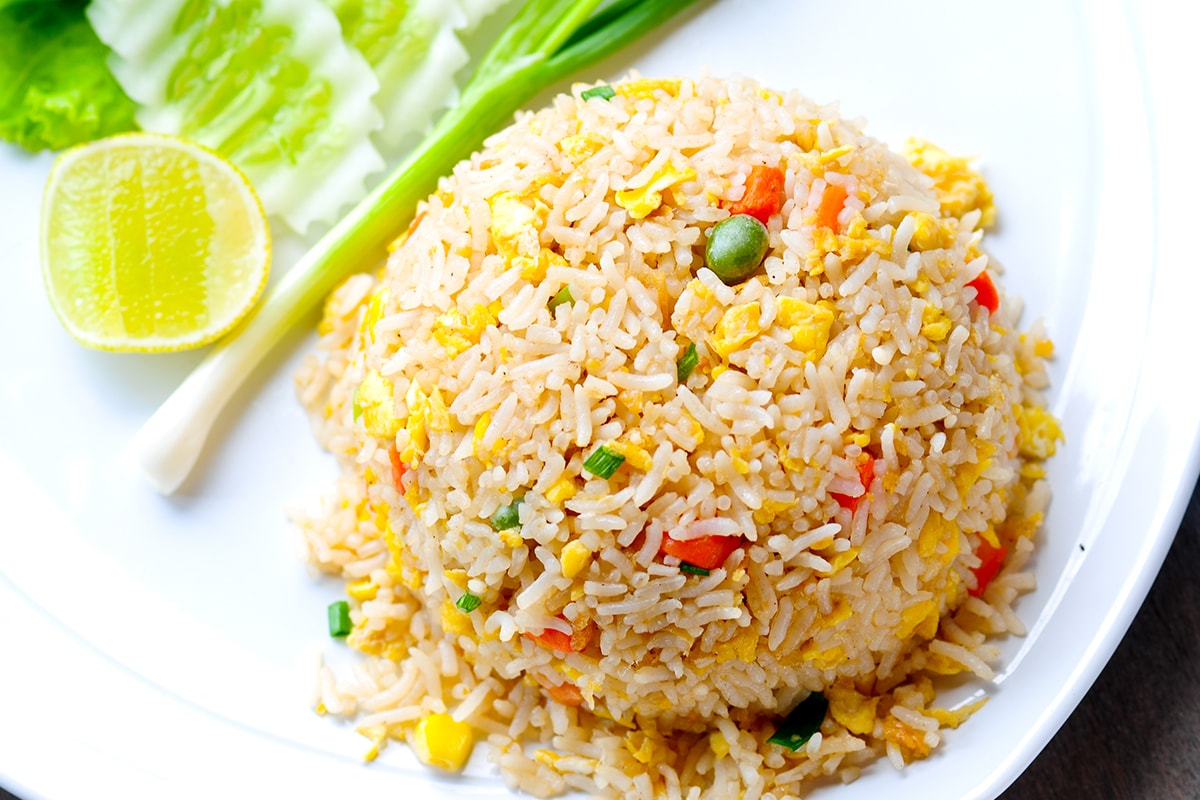
Ingredients (serves 2)
- 300–350 g cooked rice, properly chilled
- 2 tbsp cooking oil; 3 shallots, 2 garlic cloves and 1 small chilli, finely chopped
- 100 g diced chicken or firm tofu
- 2 eggs, optional
- 1–2 tbsp kecap manis (Indonesian sweet soy sauce)
- Spring onion, cucumber and a pinch of salt, to taste
Step-by-step method
- Use rice that was cooled promptly, stored in the refrigerator and kept cold until cooking. Do not use cooked rice left overnight at room temperature.
- Heat oil in a wok, cook the chicken thoroughly if using it, then add shallots, garlic and chilli.
- Push the mixture aside, scramble the eggs, then stir everything together.
- Add chilled rice, break up the grains and stir-fry until steaming hot. Add kecap manis, taste and adjust seasoning.
- Serve immediately with cucumber and spring onion.
Regional variation
Some versions include shrimp paste, anchovies or extra sambal, while others are built around vegetables. Travellers can compare local dishes in our Bali food guide or explore traditional restaurants in Jakarta.
2. Nasi kuning: turmeric coconut rice
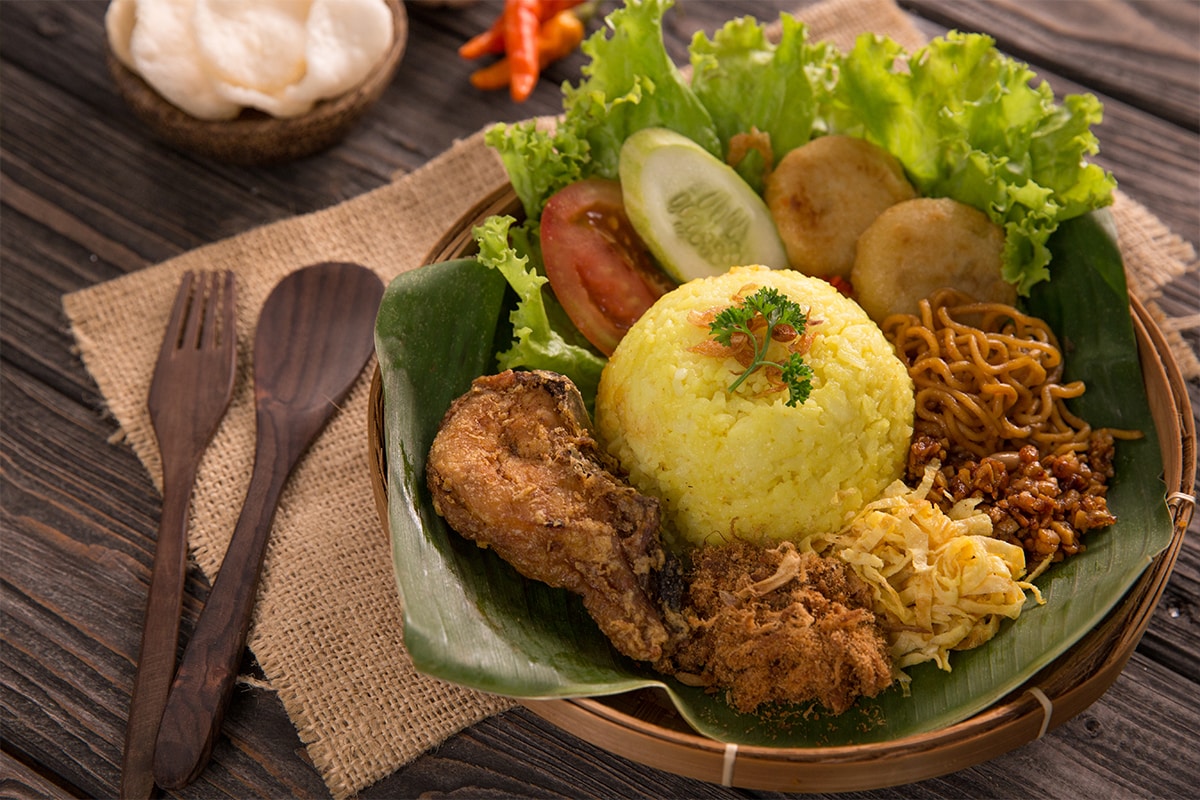
Ingredients (serves 3–4)
- 300 g uncooked white rice, rinsed
- 250 ml coconut milk plus water as required for your rice cooker
- 1 tsp turmeric powder or 2 tsp grated fresh turmeric
- 1 lemongrass stalk, bruised; 2 kaffir lime leaves, optional
- ½ tsp salt; optional fried shallots and cucumber to garnish
How to cook
- Rinse rice until the water runs almost clear and drain.
- Add coconut milk, water, turmeric, lemongrass, leaves and salt to the rice cooker, using your appliance’s recommended total liquid level.
- Cook normally and leave covered for 10 minutes to steam. Remove the lemongrass and leaves before fluffing.
- Serve with egg, vegetables, tempeh or other side dishes.
What makes nasi kuning special?
Yellow rice is often linked with celebrations and special occasions, and its symbolism varies across Indonesia. Learn about the cultural context through our nasi kuning heritage article and regional celebrations.
3. Nasi uduk: Betawi-style coconut rice
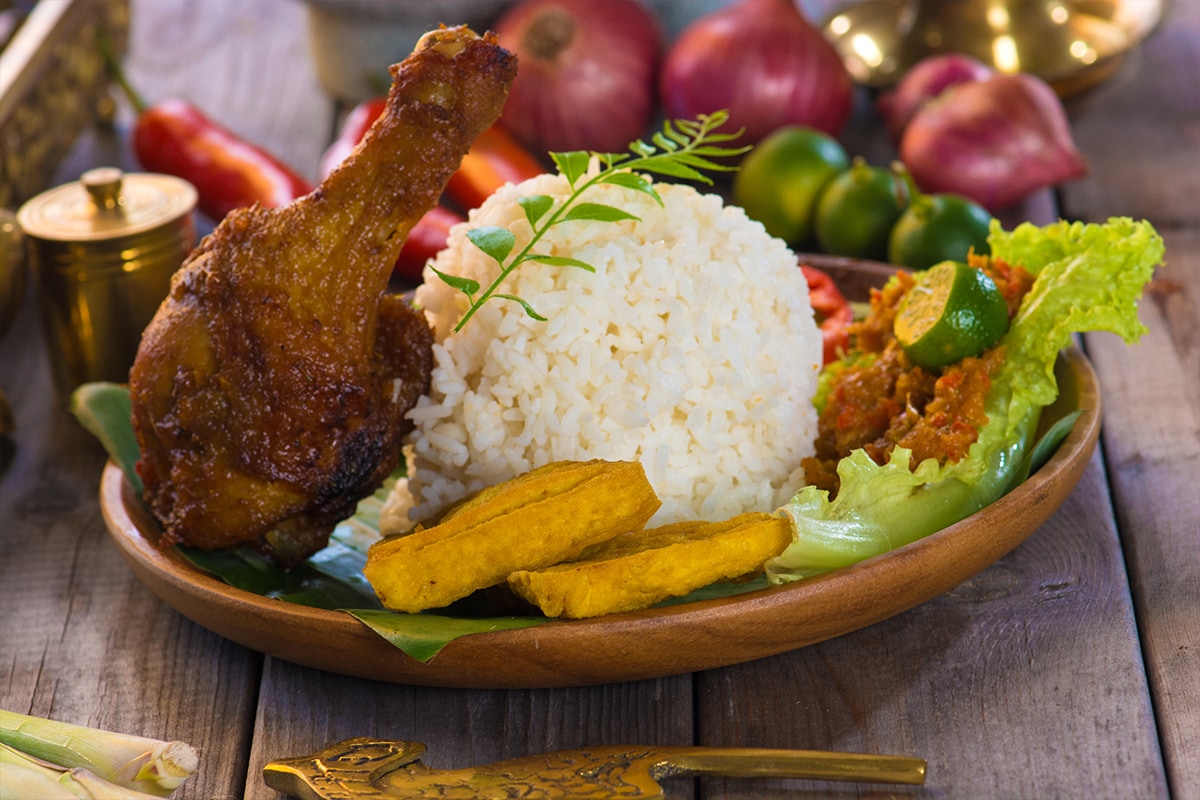
Ingredients (serves 3)
- 300 g white rice; 200 ml coconut milk
- Water as needed for the rice variety
- 1 bay leaf, 1 bruised lemongrass stalk and 1 pandan leaf if available
- ½ tsp salt; fried shallots, egg and cucumber for serving
Method
Rinse the rice, combine with the coconut milk, water, leaves and salt, then cook in a rice cooker until tender. Allow it to rest covered, discard the aromatics and fluff. Serve with fried shallots, egg, tofu, tempeh or mild sambal. Its savoury coconut fragrance is central to this Betawi-influenced Jakarta favourite.
Where to try it in Indonesia
Nasi uduk is common at morning stalls in Jakarta. Pair a food-focused trip with historic Kota Tua or browse Jakarta’s dining neighbourhoods.
4. Nasi rames or nasi campur: rice with mixed side dishes
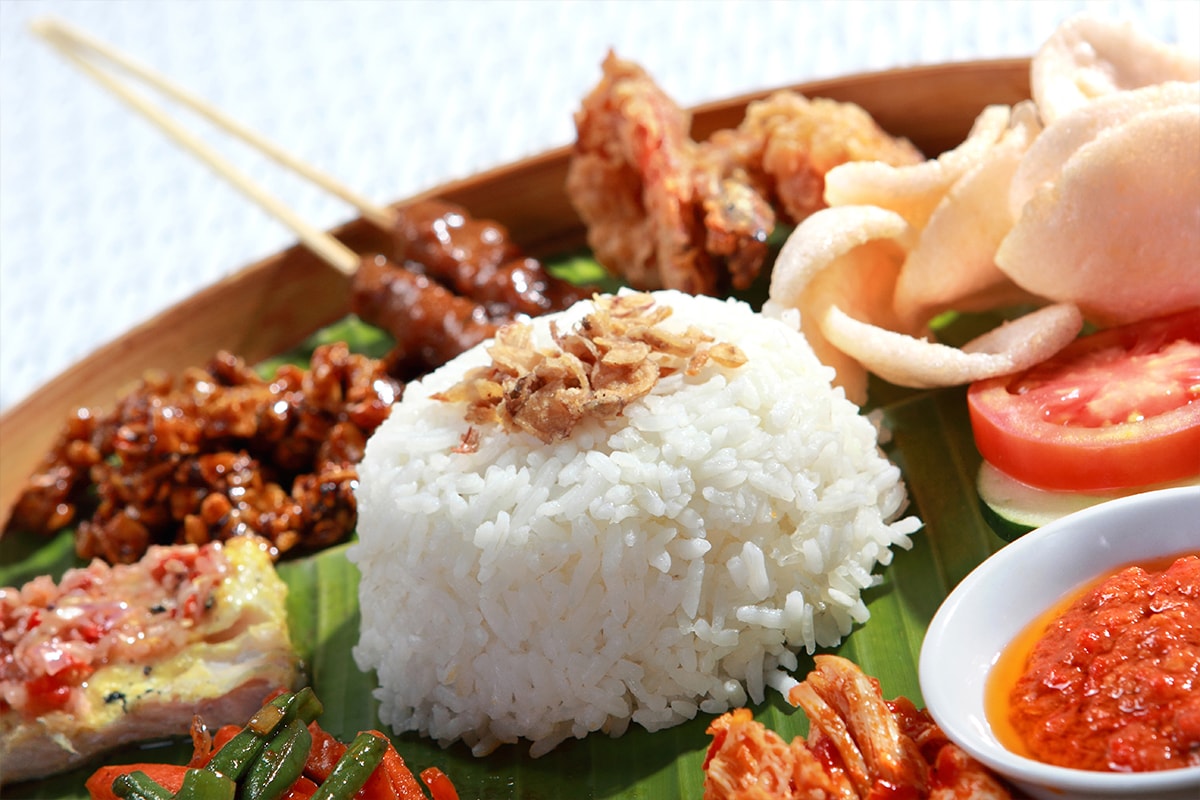
Ingredients and assembly (serves 2)
- Two portions of freshly cooked rice
- 200 g firm tofu or tempeh, sliced and pan-fried
- 150 g steamed green beans, cabbage or spinach
- 2 boiled eggs or your preferred protein
- Fried shallots, sliced cucumber, chilli condiment and seasoning to taste
How to make it
Cook rice and prepare the side dishes separately. Arrange a generous portion of rice with vegetables, protein and a small amount of sambal. Nasi campur means “mixed rice” and can vary tremendously by region and stall. There is no single universal recipe: the delight is in assembling complementary textures and flavours.
Ways to vary the plate
Try sautéed long beans, spicy potatoes, grilled chicken or peanut-based vegetables, keeping dietary needs in mind. For context, compare other Indonesian favourites.
5. Bubur ayam: savoury chicken rice porridge
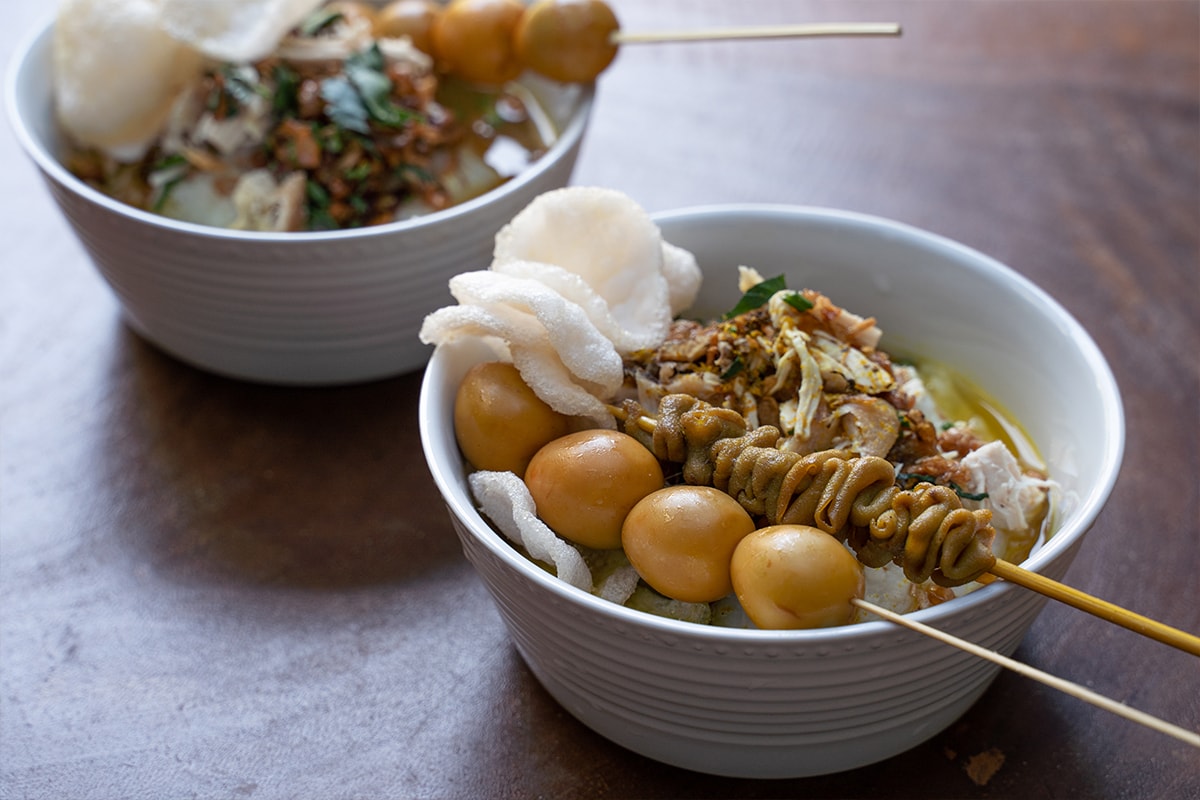
Ingredients (serves 3)
- 150 g uncooked white rice, rinsed
- 1–1.2 litres water or unsalted chicken stock
- 200 g cooked, shredded chicken
- Salt, pepper and a little garlic to taste
- Fried shallots, spring onion and optional crackers
Cooking method
- Simmer the rice in water or stock over a low heat for 35–50 minutes, stirring occasionally, until the grains soften into porridge. Add more liquid as required.
- Season lightly and prepare shredded cooked chicken separately.
- Ladle hot porridge into bowls, top with chicken and garnish with shallots and spring onion.
- Serve crackers and chilli on the side to keep their texture.
Food-safety note
Serve freshly made rice porridge hot. Cool leftovers rapidly and refrigerate promptly, then reheat thoroughly only once. Families looking for lighter dishes can explore plant-focused Bali dining and adapt the porridge with mushrooms instead of chicken.
6. Lontong sayur: rice cakes in vegetable coconut gravy
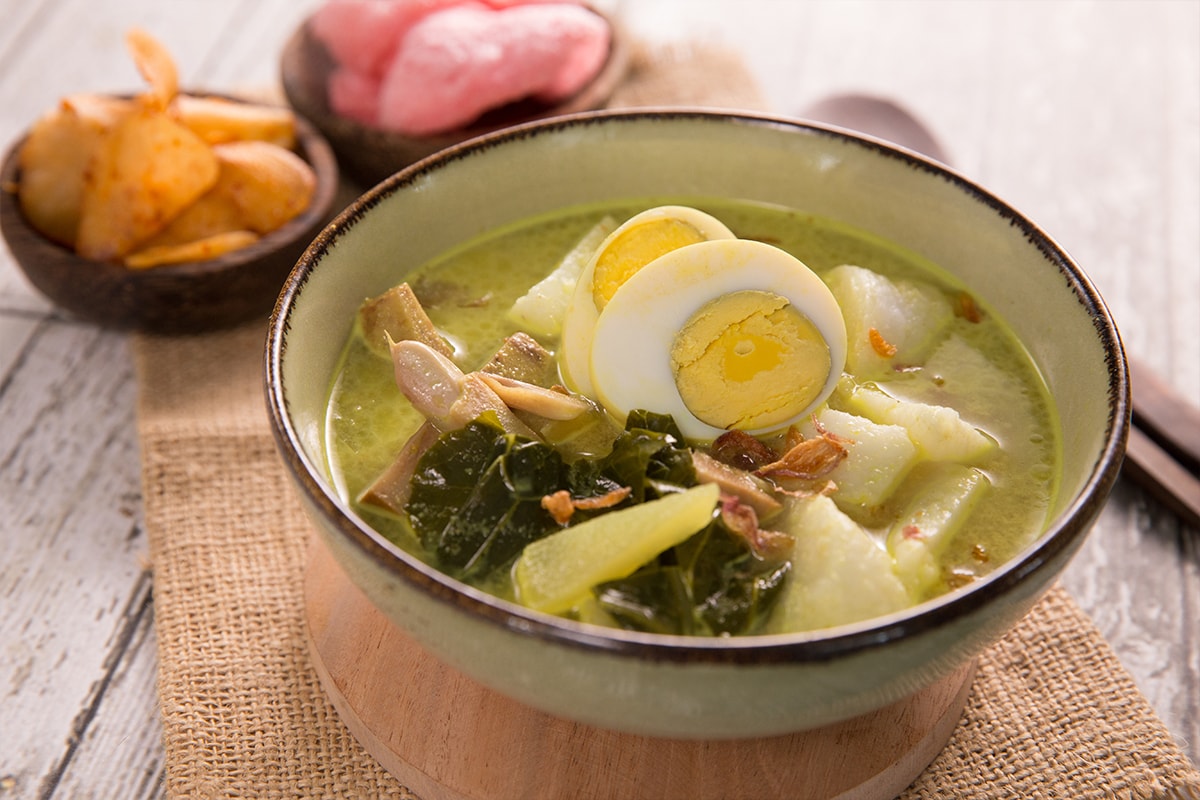
Ingredients (serves 3)
- 300–400 g ready-to-eat lontong rice cakes, sliced
- 250 ml coconut milk and 250 ml water or vegetable stock
- 150 g chayote or cabbage, thinly cut
- 2 garlic cloves, 3 shallots, ½ tsp turmeric and chilli to taste
- 1 stalk lemongrass, bruised; salt and a little sugar
Cooking method
Blend or finely chop garlic, shallots, turmeric and chilli. Sauté in a little oil, add lemongrass, vegetables and stock, and simmer until the vegetables soften. Pour in coconut milk and keep the heat gentle to avoid splitting. Add sliced cooked lontong to serving bowls and ladle the hot gravy over them. For convenience use properly stored commercial rice cakes and follow package reheating directions.
Common variations
Some areas add green beans, eggs, tofu or spicy coconut gravy. For a broader picture of Indonesia’s varied coconut-based dishes, read Manado specialities and Minangkabau cooking.
7. Mie goreng: Indonesian-style fried noodles
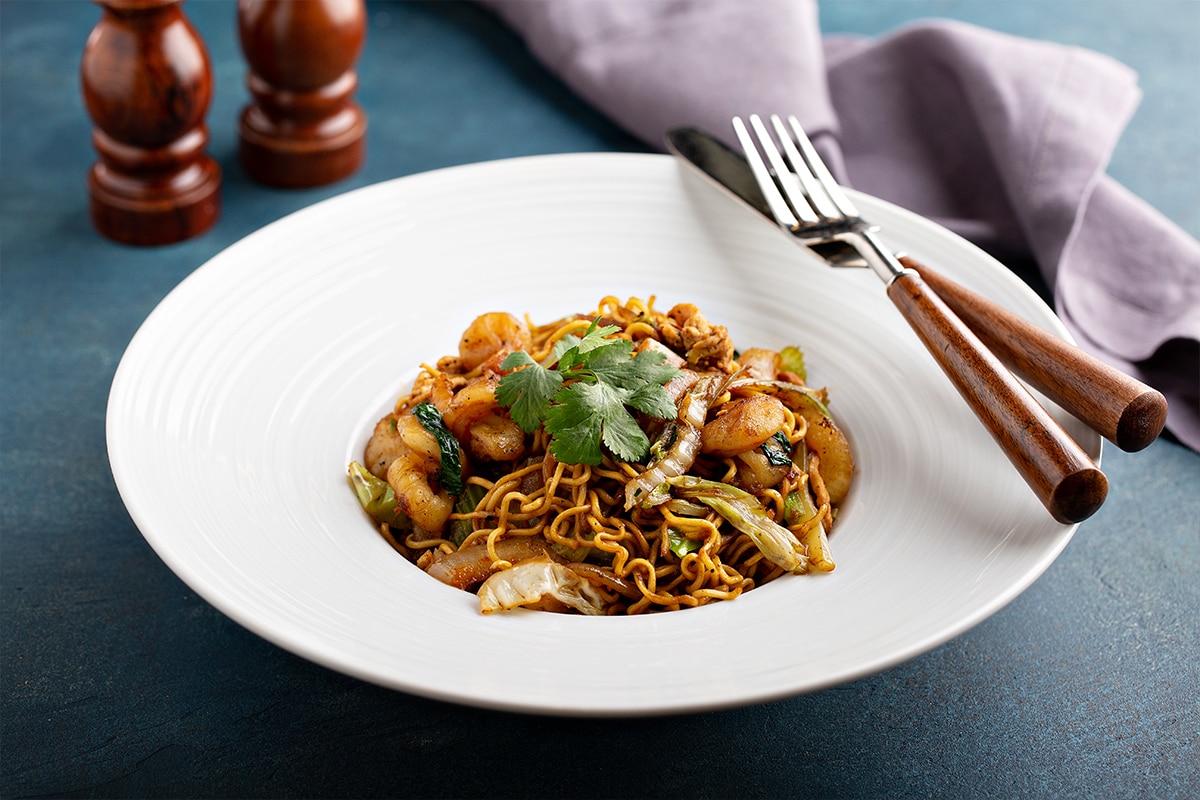
Ingredients (serves 2)
- 200 g dry wheat noodles or about 300 g fresh noodles
- 2 tbsp oil, 2 garlic cloves and 2 shallots, sliced
- 150 g sliced cabbage and carrots
- 1–2 tbsp sweet soy sauce and 1 tsp regular soy sauce
- One egg or 100 g tofu, optional; chopped scallions
Method
- Cook noodles according to the packet directions until just tender, then drain.
- Heat a wok with oil and stir-fry the shallots, garlic and vegetables until cooked yet still crisp.
- Add the egg or tofu if using, then noodles and sauces. Toss until everything is steaming hot.
- Finish with scallions and adjust sweetness or chilli.
Make it your own
Use different vegetables or add a few drops of lime for freshness. For Indonesian noodle culture see Indomie and instant noodles, and browse more dishes to cook at home for future meals.
If you travel through Jakarta, a visit to a Padang restaurant also offers a useful perspective on Indonesia’s many rice dishes and regional vegetable preparations.
Ingredient shopping for Indonesian breakfasts abroad
Core ingredients
Look for rice, shallots, garlic, fresh chilli, kecap manis, coconut milk, tempeh, turmeric, lemongrass, pandan and kaffir lime leaves. Asian supermarkets often stock shelf-stable versions. Use alternatives thoughtfully and never replace an allergen without checking the final product’s labels.
Vegetarian and allergy adjustments
Tempeh and tofu can replace many meats, but check soy sauces, shrimp paste, seasoning mixes and crackers for soy, wheat, shellfish and other allergens. Vegetarians should verify whether stock and sambal contain seafood. Learn more about the diversity of Indonesian everyday cooking.
Where to experience Indonesian breakfast when travelling
Early-morning warungs, hotel buffets and market stalls all offer different flavours. In Jakarta, nasi uduk and bubur ayam are common; around Bali, rice plates and cafés may offer traditional dishes alongside international brunch options. Try Canggu restaurants and explore Indonesia’s coffee varieties for a complete morning ritual. Visitors beginning in the capital can also enjoy Jakarta Indonesian restaurants.
Frequently asked questions
What is a typical Indonesian breakfast?
There is no single national breakfast: rice dishes, porridge, noodles and regional specialities all appear on morning menus.
Can I make these dishes without special equipment?
Most require only a saucepan, frying pan and rice cooker or lidded pot. A mortar is helpful but not essential.
Can I keep cooked rice overnight for nasi goreng?
Yes if it is cooled rapidly, refrigerated promptly and kept cold until cooking. Rice left at room temperature for long periods can cause foodborne illness.