Indonesia’s extraordinary textile traditions tell stories that a souvenir label rarely captures. A single cloth may record a family’s ancestry, mark a marriage, express prayers for protection or reveal the natural landscape that inspired its pattern. In weaving villages from Bali to Sumatra and eastern Indonesia, those meanings are passed between generations alongside exacting skills in dyeing, tying and weaving threads.
This guide goes beyond the five familiar fabric names. It explains how each textile is made, why its motifs matter, where travelers can encounter the makers, and how to buy responsibly. Batik and ikat are not interchangeable: batik generally uses wax-resist patterning on fabric, whereas ikat creates motifs by tying and dyeing threads before weaving. To see how textile craft fits within wider Indonesian traditions, read our introduction to Indonesia’s intangible cultural heritage and our companion feature on traditional weaving villages.
Five Traditional Indonesian Fabrics and the Stories They Carry
1. Gringsing from Tenganan, Bali: A Cloth Associated with Protection
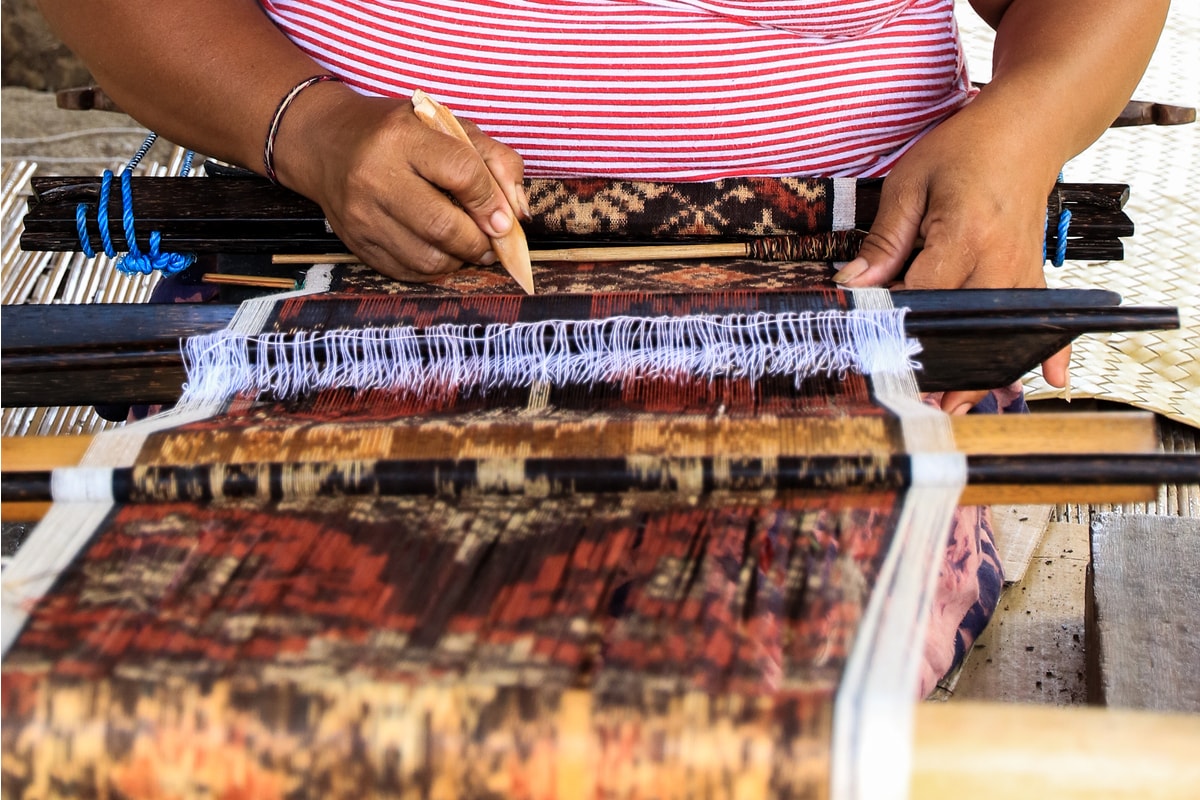
In the Bali Aga community of Tenganan Pegringsingan, East Bali, gringsing is much more than a beautiful souvenir. Its intricate geometric patterns are traditionally associated with protection and ceremonial life. The name is commonly explained from the Balinese words gring (illness) and sing (no), suggesting freedom from sickness. This is a cultural belief about the cloth’s meaning, not a medical claim.
How the Double-Ikat Technique Works
Gringsing is distinguished by double ikat: the lengthwise warp threads and crosswise weft threads are both bound and dyed before they are woven. The painstaking challenge comes when the dyer’s intended motifs on the two sets of threads must align at the loom. This is not the same as double knitting, an inaccurate description that sometimes appears in travel articles. Traditional methods also involve an extended dyeing and preparation process; completion times vary by size, motif and workshop rather than following a universal schedule.
What the Symbols Mean
Patterns can convey ideas connected to protection, cosmic order and village ritual. Some local accounts connect the textile’s development with the deity Indra and imagery drawn from the night sky. These stories belong to Tenganan’s living oral tradition, and visitors should ask local weavers about the significance of a particular design rather than assuming every pattern has exactly the same meaning.
Where to See Gringsing
Consider a respectful visit to Tenganan Pegringsingan in Karangasem, east Bali. Ask before entering workshops, photograph only with permission and check whether any cloth on display has a ceremonial use that makes it inappropriate to handle. Nearby, visitors can discover another aspect of village traditions in Penglipuran Village and explore other cultural villages in Bali. For an explanation of the textile’s method, consult the Museum Nusantara article on gringsing.
2. Flores Ikat: Motifs of Community and Place

The island of Flores, East Nusa Tenggara, contains many distinct textile traditions, not one uniform ‘Flores pattern’. Weavers in Sikka and Maumere, Ende and Lio, Ngada and Manggarai use local knowledge and visual vocabularies. Some designs evoke ancestral stories, nature, social ties and ritual obligations; their precise meanings differ among communities and makers.
What Does Ikat Mean?
In an ikat textile, sections of thread are tightly wrapped before dyeing to resist the color. Unwrapping reveals a design that only fully emerges as the dyed threads are woven. Warp ikat, weft ikat and double ikat describe different thread systems involved in that process. Many workshops use handlooms and inherited skills, but production methods, materials and the time required depend on the particular textile. It is misleading to promise that every Flores ikat needs precisely twenty steps or one month.
Meet Weavers on Flores
Travelers interested in the making process can seek out community workshops around Sikka and Maumere, or artisan initiatives reached through Labuan Bajo and other local centers. Ask what can be demonstrated during your visit, how long a workshop lasts and whether the cloth is made locally. A genuine encounter should include time to hear the artisan’s explanation, not only a photograph beside a loom.
Combine a textile-focused journey with a look at traditional villages and rural escapes or broader cultural experiences across Indonesia. A piece made and sold by its weaver is a more meaningful reminder of Flores than an anonymously sourced printed imitation.
3. Sumba Ikat: Horses, Ancestors and Ceremonial Cloth
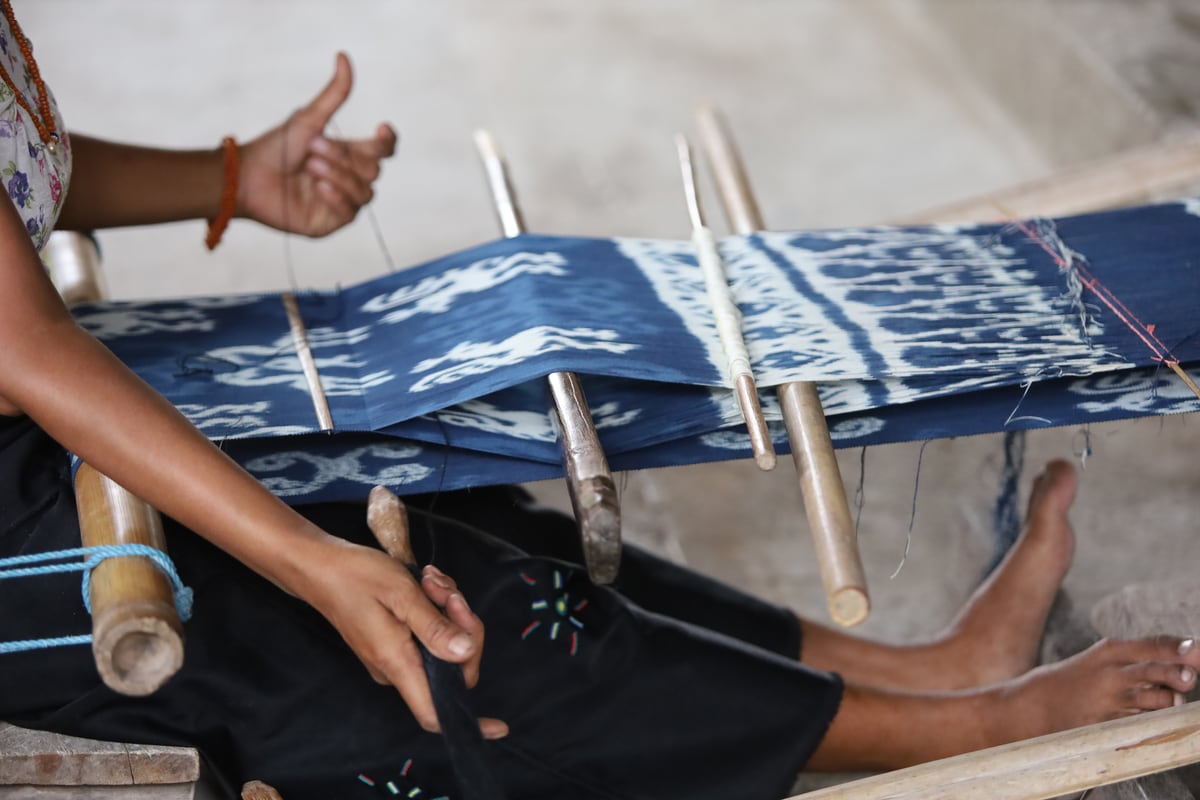
On Sumba, particularly in the island’s eastern weaving communities, vividly patterned ikat fabrics are part of social and ceremonial life. Images of horses, birds, other animals and human figures can carry associations with local status, ancestry, the natural world and spiritual belief. The meanings are not universal: location, weaving lineage and intended use help determine how a motif should be understood.
Why Is Authentic Sumba Ikat So Valuable?
Traditional makers may spin cotton, tie threads into patterns, prepare dyes and carefully manage the weaving process by hand. Depending on the cloth, natural dye sources can include indigo and morinda root. The most complex pieces require exceptional patience. Claims that every cloth takes three years or exactly forty-two steps are overly precise: production schedules vary greatly.
Cloth for Life-Cycle Ceremonies
In many Sumbanese communities, textiles participate in exchanges and ceremonies surrounding marriage, funerals and other transitions. A cloth may be a family heirloom, not merely clothing. UNESCO’s 2013 documentation on Sumba ikat describes both this ceremonial importance and concerns about continuity of weaving knowledge. Importantly, that documentation is a nomination decision; do not represent Sumba ikat as an independently inscribed UNESCO element. Read the UNESCO decision and the Indonesian cultural authority’s explanation for background.
Visitors should buy with curiosity and respect. Ask whether an object is made for everyday use, display or ritual, and be cautious about purchasing older heirlooms without a clear and ethical provenance. For broader ideas, our Indonesian handicraft guide highlights the value of meeting artisans.
4. Ulos from North Sumatra: A Woven Expression of Blessing
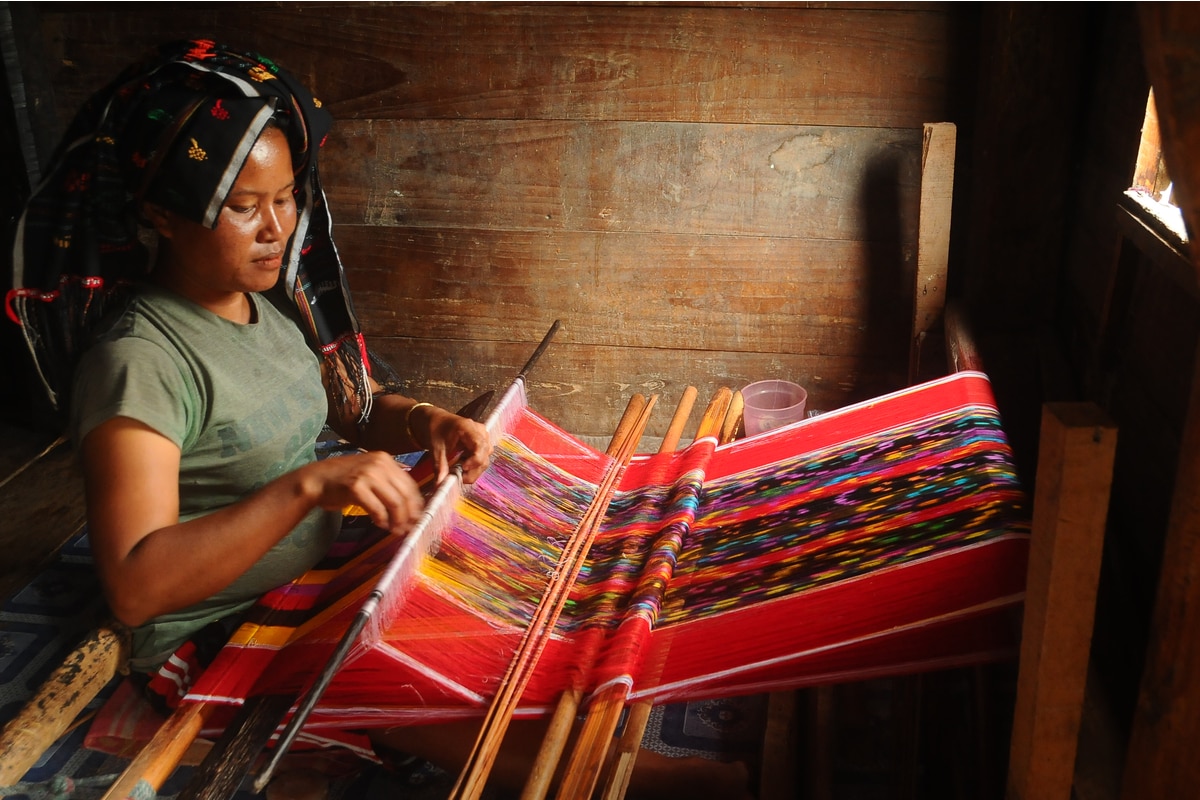
Ulos is central to the lives of many Batak communities in the Lake Toba region of North Sumatra. The word is commonly associated with a covering or blanket, and traditional interpretations describe ulos as a source of warmth alongside fire and sunshine. In customary exchanges, receiving ulos can signify blessing, kinship, respect or support.
How Ulos Is Made and Given
Weavers arrange threads on traditional looms to form rich stripes and patterned compositions, often incorporating red, black and white. Some styles use supplementary threads; techniques and color schemes differ among Batak groups. Ulos Ragidup and Ulos Sadum are among the well-known names, but they cannot be treated as a single standardized hierarchy of ‘more expensive’ or ‘higher-class’ fabrics. The correct choice depends on local custom and the relationship between giver and recipient.
Where to Learn About Ulos
Travelers can visit weaving communities around Samosir Island and Lake Toba, including the Huta Raja weaving area of Lumban Suhi-Suhi. The official Indonesia Travel guide to ulos explains its ceremonial uses and notes its recognition as Indonesian intangible cultural heritage in 2014. An ulos is not necessarily an ordinary fashion scarf: consider asking a local guide what a specific piece represents before wearing it in a ceremonial context.
If you are building a North Sumatra itinerary, our guide to the Batak Museum and TB Silalahi Center offers additional cultural background. You can also connect textile traditions with traditional Indonesian architecture.
5. Papuan Batik: Local Creativity Through a Traveling Technique
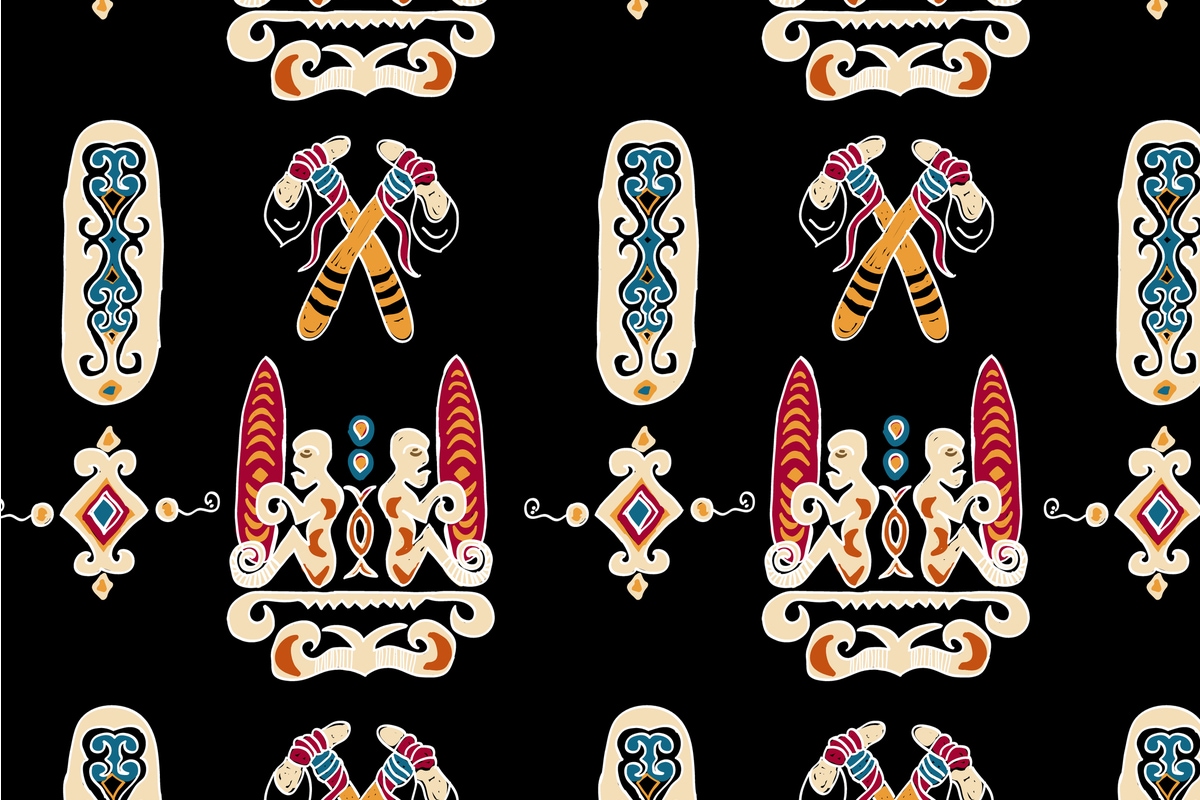
Batik has a long history in Java, but artisans across the Indonesian archipelago have adopted and adapted its techniques. Papuan batik is a particularly vivid example of cultural creativity: designs can feature birds-of-paradise (cenderawasih), tifa drums, traditional houses, regional patterns and imagery associated with Papuan landscapes and peoples.
Is Papuan Batik the Same as Javanese Batik?
The key difference is not that one is ‘authentic’ and another is not. Traditional batik uses wax as a dye-resistant medium, while motifs and artistic conventions can vary widely. Contemporary fabric sold as ‘Papuan batik’ may be hand-drawn, stamped or simply printed with batik-inspired designs. Ask what process was actually used. Indonesia’s batik technique, symbolism and related culture were inscribed by UNESCO in 2009, as explained on its official Indonesian Batik heritage listing.
How Papuan Motifs Tell Stories
A cenderawasih or bird-of-paradise motif may evoke the beauty of the region’s wildlife, while other images refer to local artistic traditions. Avoid assuming that every motif has one fixed meaning across all Papuan communities. Ask who designed the textile and how its imagery relates to the maker’s own cultural heritage. Travelers curious about material culture can read more in our guide to batik stories and our overview of batik-inspired home decor.
What Is the Difference Between Batik, Ikat and Songket?
Batik uses wax resist on fabric to create selective dye patterns. Ikat uses resist binding on threads before weaving, making motifs appear when threads are assembled on the loom. Songket adds decorative supplementary threads, often metallic-looking, during weaving. These categories describe techniques, not simple lists of which Indonesian island ‘owns’ a style. Individual communities may practice more than one method.
Where Can International Visitors Learn Traditional Weaving?
Visit with a Community Guide
Choose workshops that welcome visitors and can explain their methods in the language you need. Cultural tourism can help support craftspeople when demonstrations are paid fairly and the people who make the cloth receive credit. Seek genuine textile experiences rather than souvenir stops built entirely around sales commissions. Broader ideas include award-winning tourism villages and village-based travel.
Questions to Ask Before Buying
Ask who made the fabric, whether it was handwoven, whether dyes are natural or synthetic, how long the maker worked on it and whether the motifs are intended for ordinary wear. Handwoven does not always mean naturally dyed; machine-spun thread does not automatically mean the weaver lacks skill. A transparent description is more useful than a vague ‘100% traditional’ label.
Respect Ritual Textiles
Some cloths have roles in worship, marriage, funerals and customary exchange. Do not photograph or try on a ceremonial textile without consent. Request care instructions and pack delicate pieces away from moisture and direct sunlight. For a broader cultural itinerary, Yogyakarta’s heritage experiences and its handicraft markets can help travelers look beyond mass-produced souvenirs.
FAQs About Indonesian Traditional Fabrics
Which Indonesian textile is made using double ikat?
Gringsing associated with Tenganan Pegringsingan in Bali is renowned for double ikat, involving both warp and weft threads. Calling it ‘double-knit’ is incorrect.
Are all traditional Indonesian fabrics batik?
No. Batik, ikat, ulos and songket involve different traditions and often different production techniques. Regional names describe living cultural practices as well as textiles.
Does UNESCO recognize every Indonesian traditional textile?
No. Indonesian batik is on UNESCO’s Representative List, but separate traditions should not be described as UNESCO-listed without checking their exact status. UNESCO documentation may include nominations or safeguarding discussions that are not the same as inscription.
How can I support weavers when traveling?
Buy directly where possible, pay fairly, learn the cloth’s origin and share the maker’s name with permission. Consider a properly organized workshop. For cultural context outside weaving, explore Indonesia’s wayang heritage and Balinese performance traditions.
References and Further Reading
Primary and cultural sources: UNESCO, Indonesian Batik; UNESCO, decision regarding Sumba Ikat nomination; Indonesian Ministry of Culture, Sumba Ikat; Indonesia Travel, Ulos Batak; and Museum Nusantara, Gringsing. Local meanings may differ across communities; speak with weavers and cultural guides for a particular cloth.
Follow iseeindonesia.com for more travel inspiration inside Indonesia!